Skip to content

Work / 02Shipped work

Role
Experience Designer, HARMAN
Worked with
Bang & Olufsen, Hyundai, HARMAN engineering
Year
2024
Status
Shipped · Hyundai, Skoda

Shaping sound by feel, not by equaliser.

A new in-vehicle audio interaction model for Audio by Bang & Olufsen, shipped in Hyundai and Skoda vehicles: one feel-based gesture instead of three layers of sliders, AI tuning in plain words, and sign-in with a single QR code.

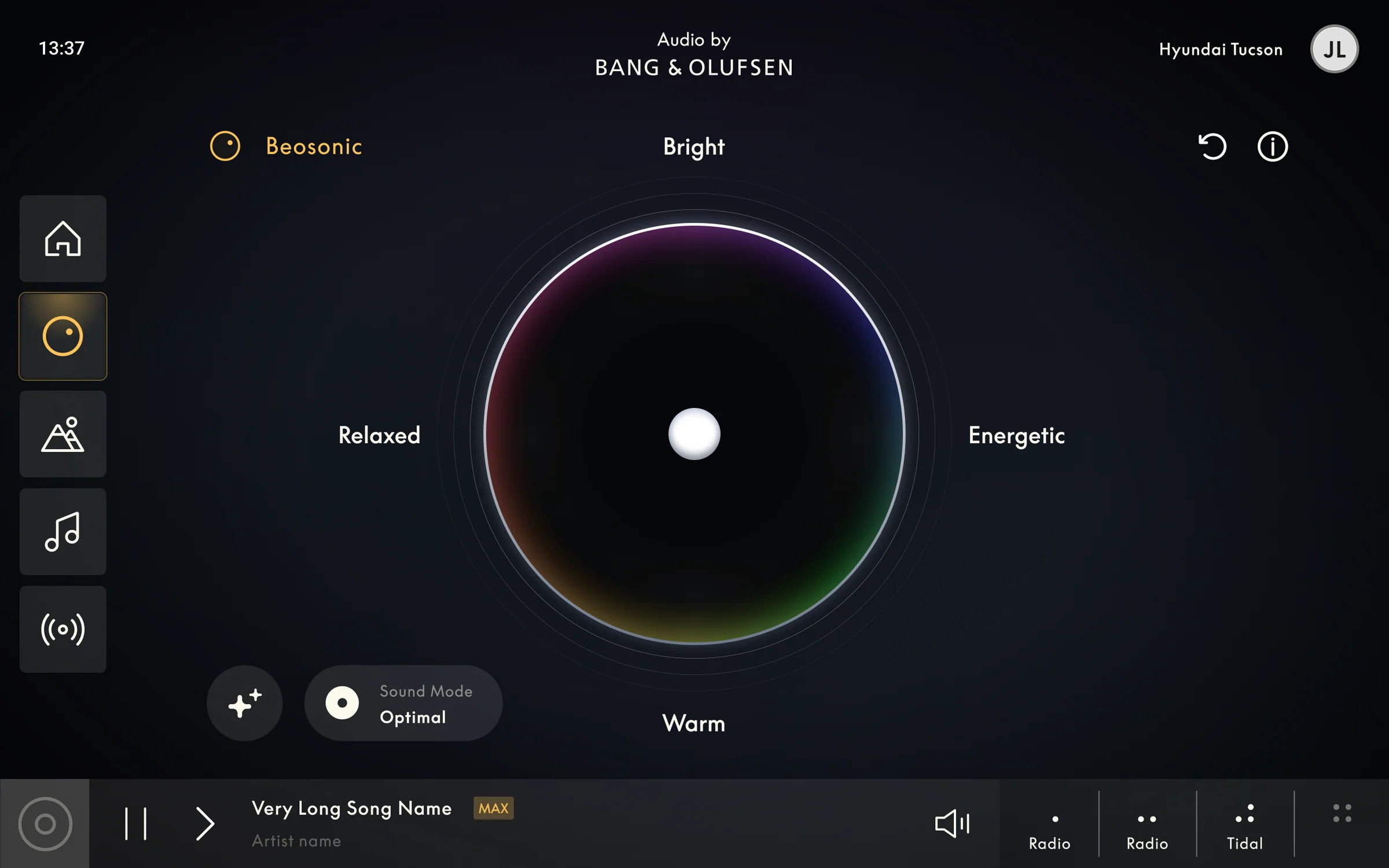
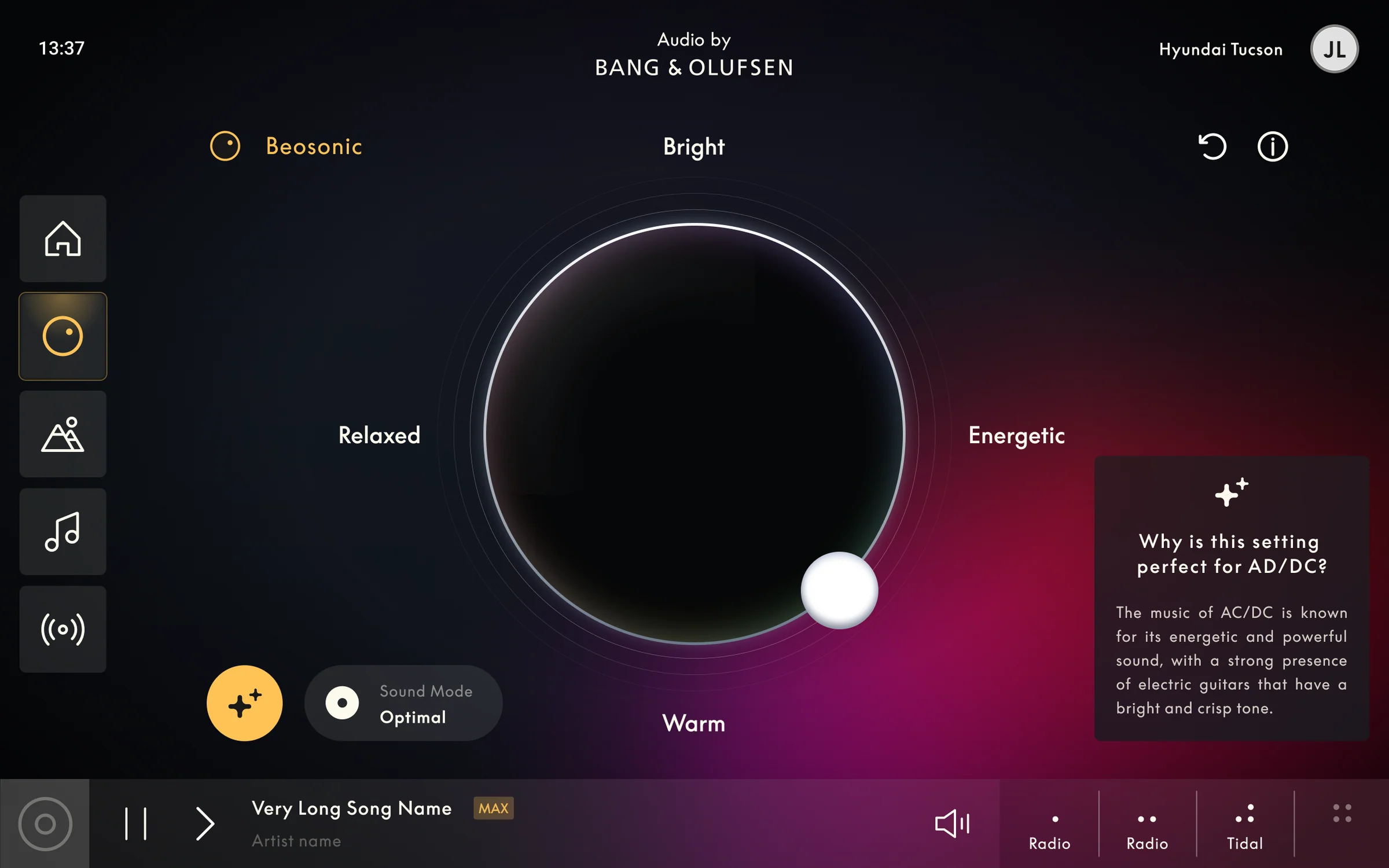
Beosonic: one dot on two feel-based axes
−40%Interaction time

In 60 seconds

Problem

Premium audio meant an equaliser three layers deep — meaningless to most drivers and distracting at speed.

What I did

Designed one feel-based gesture, AI tuning in plain words and one-QR sign-in, then tested it in the car.

Result

−40%

interaction time; navigation from 3 layers to 1

In-car prototype sessions · 98 participants

My call

When an engineer wanted to keep the traditional equaliser, I proposed testing both against the same tasks instead of arguing — and the team prototyped one gesture-based control, with the advanced settings kept within reach. In testing it cut interaction time 40% against the 3-layer model, and it shipped.

My part

I designed Beosonic, AI sound tuning and the QR sign-in, then tested them in the car with live sound and light, and fed six fixes back into the spec.

On this page

  1. 01The problem
  2. 02My role and scope
  3. 03How I led the work
  4. 04Key decisions
  5. 05Process
  6. 06The product, screen by screen
  7. 07Outcome
  8. 08What I learned
  9. 09What I’d do next

01

The problem

Bass, treble and fader, three layers deep. Most drivers never touch them, and the ones who do take their eyes off the road — so the hardware’s quality goes unnoticed.

02

My role and scope

  • Aligned with Bang & Olufsen in a 2-day workshop, then explored the gesture model and two experience tiers.
  • Designed Beosonic, AI sound tuning and the sign-in flow, approved section by section.
  • Tested in the car with live sound and ambient light, and fed six fixes back into the spec.

03

How I led the work

01

Aligned two brands

Aligned with Bang & Olufsen in a 2-day workshop, then had each section approved with them before it moved on.

02

Settled a debate with evidence

When engineering wanted to keep the equaliser, I proposed testing both on the same tasks. The gesture model cut interaction time 40%.

03

Designed the whole system

Beosonic, AI sound tuning and one-QR sign-in, with light behaviour specified for every state.

04

Closed the loop in the car

Tested with live sound and light in the vehicle and fed six fixes back into the spec before launch.

04

Key decisions

Decision 01

Move one dot to shape sound.

Drivers need to change the sound at arm’s length, in a moving car, without understanding audio engineering.

Rejected

✕ Equaliser sliders — bass, treble, fader

Three layers deep, meaningless to most drivers and distracting at speed.

Chosen

✓ One dot on two feel-based axes

Bright–Warm and Relaxed–Energetic: the dot is the sound, with safe preset modes underneath.

Trade-off we accepted

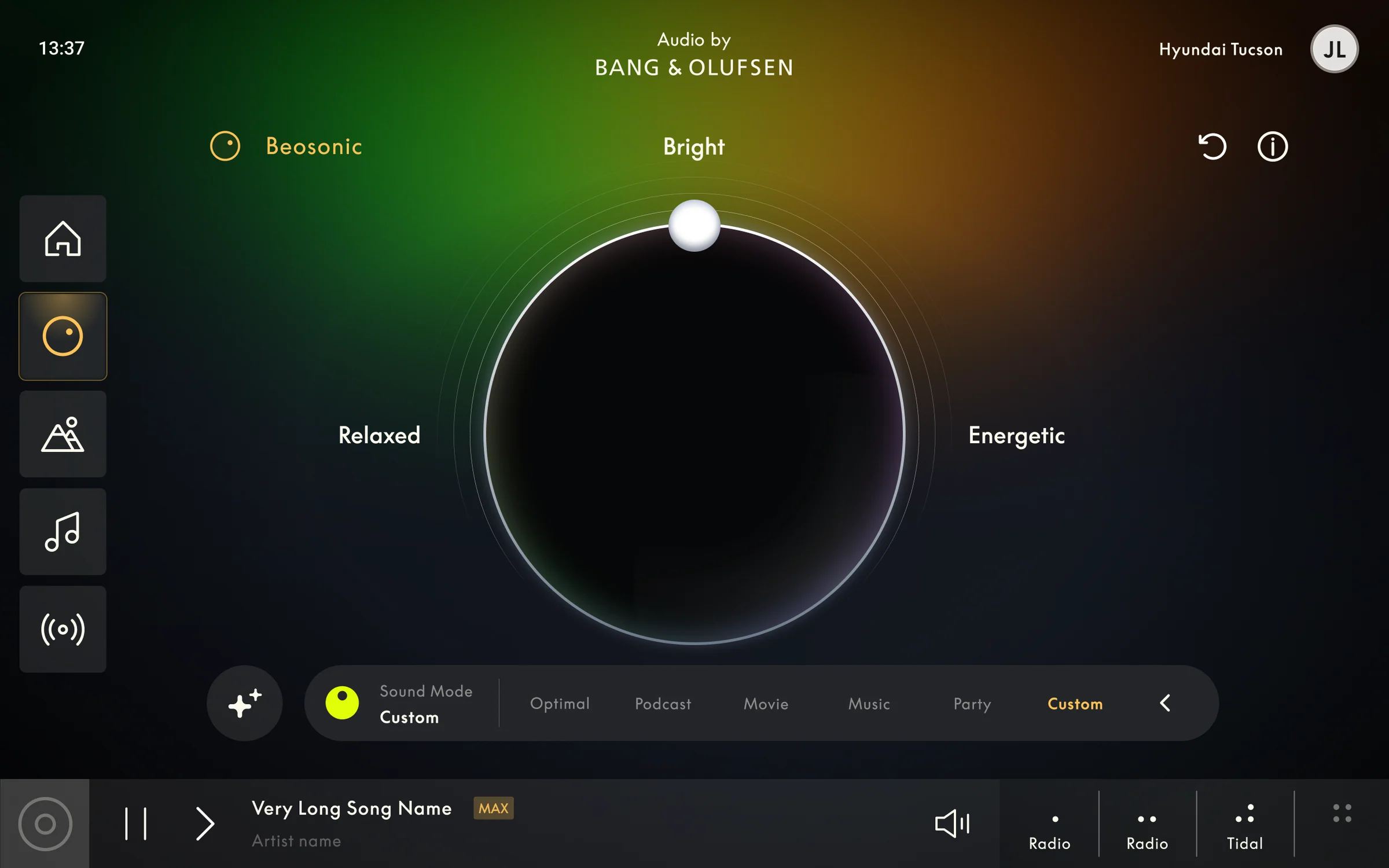
Presets don’t autosave — tap to load, long-press to save — so favourites are never silently overwritten.
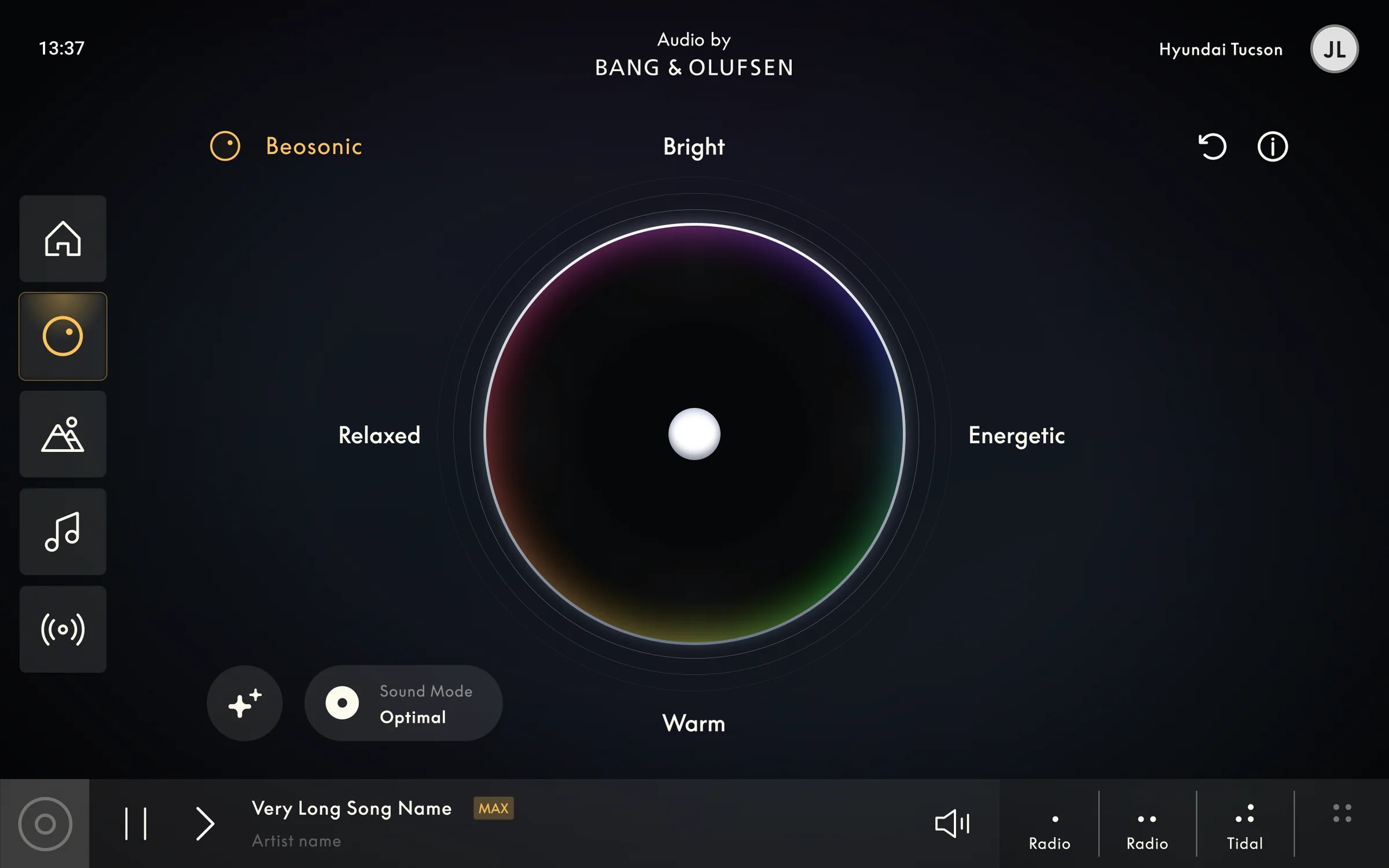
Beosonic sound circle

Decision 02

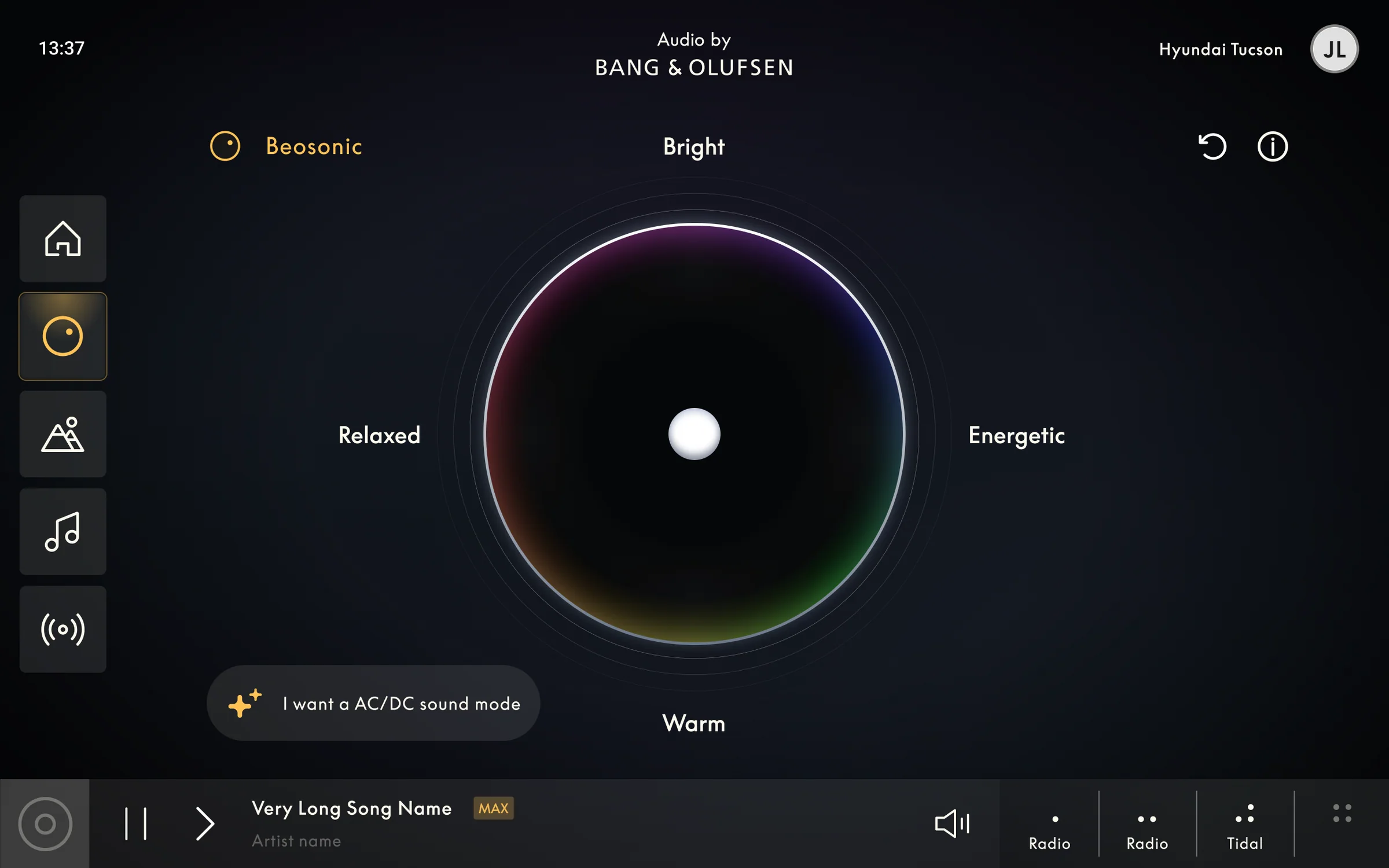
Ask for a sound in plain words.

AI tuning had to help drivers, not hide what changed.

Trade-off we accepted

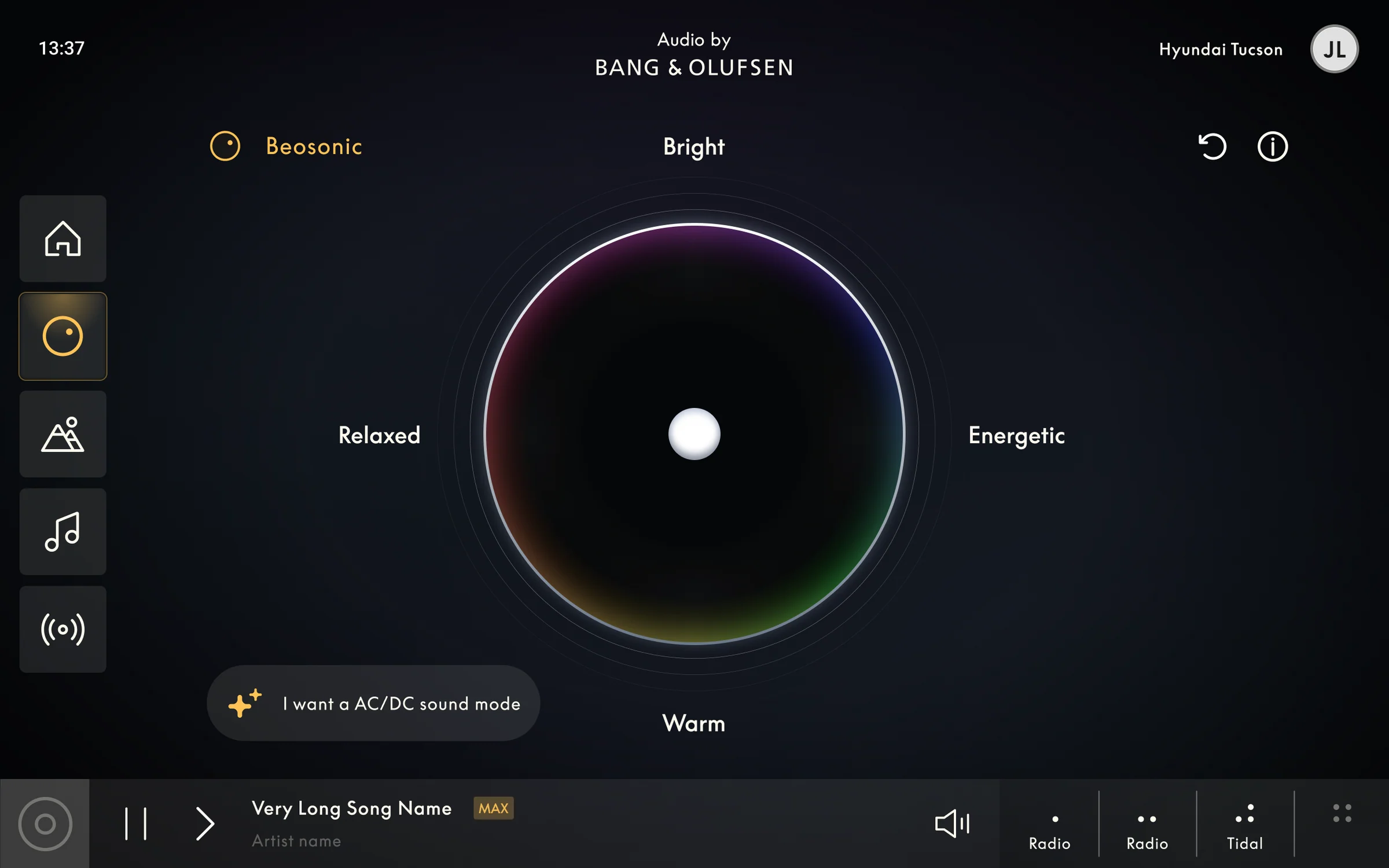
“I want an AC/DC sound mode” lands on the same circle, so the AI answer teaches the manual control — and one tap undoes any AI change.

An AI sound request shown on the same circle

Decision 03

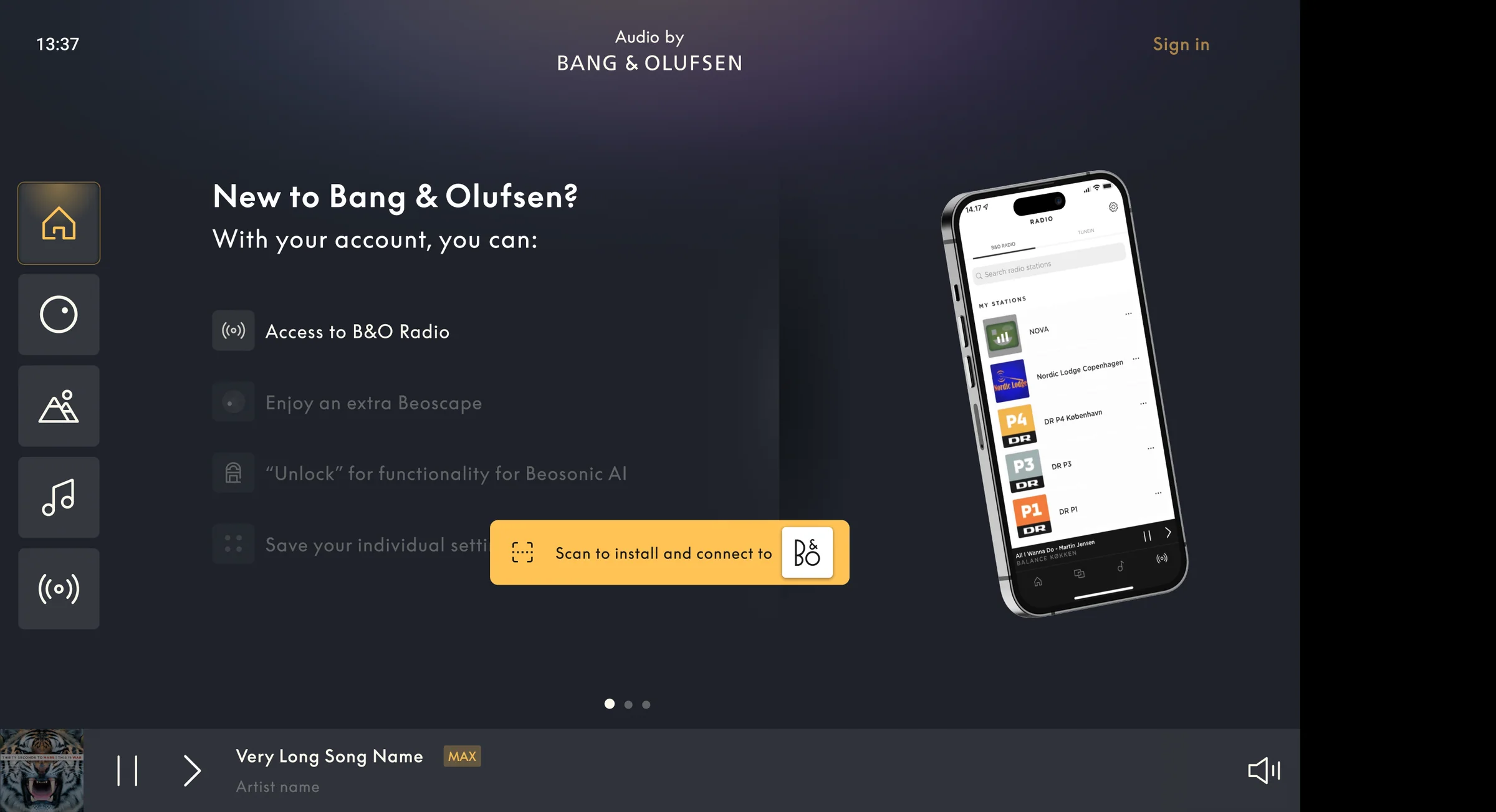
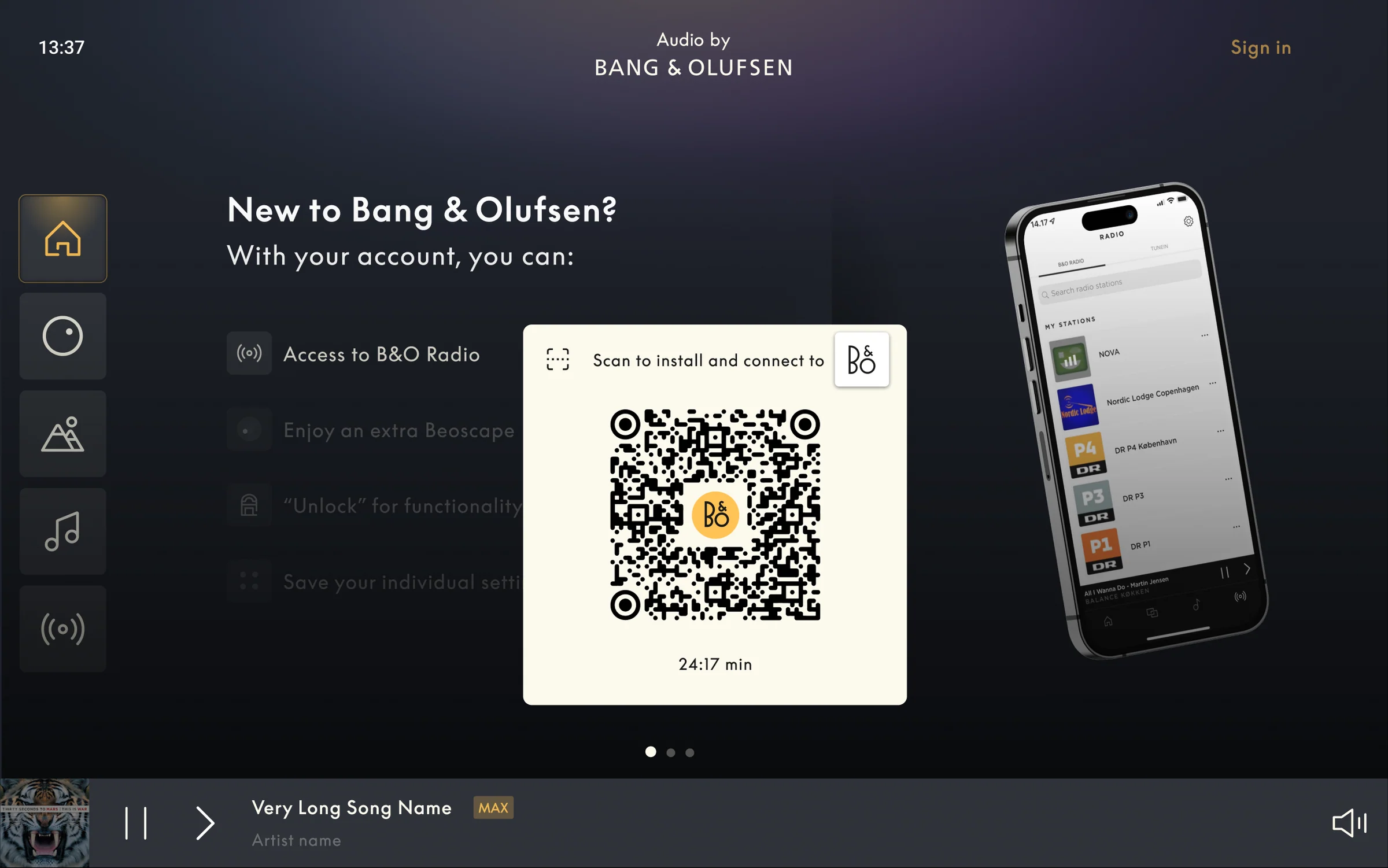
Sign in without typing in a car.

AI tuning, B&O Radio and favourites need an account, but nobody should type on a car screen.

Rejected

✕ Type credentials on the car screen

Slow, error-prone and unsafe in a vehicle.

Chosen

✓ One QR code installs the app and pairs the car

Benefits are shown before the ask.

Trade-off we accepted

Two tiers: fully useful signed out; signing in visibly adds AI tuning, B&O Radio and favourites.

QR sign-in
QR sign-in

05

Process

  1. 01Align2-day workshop with B&O
  2. 02ExploreGesture model and two tiers
  3. 03DesignSection-by-section approvals
  4. 04Test & refineIn the car, with live light

06

The product, screen by screen

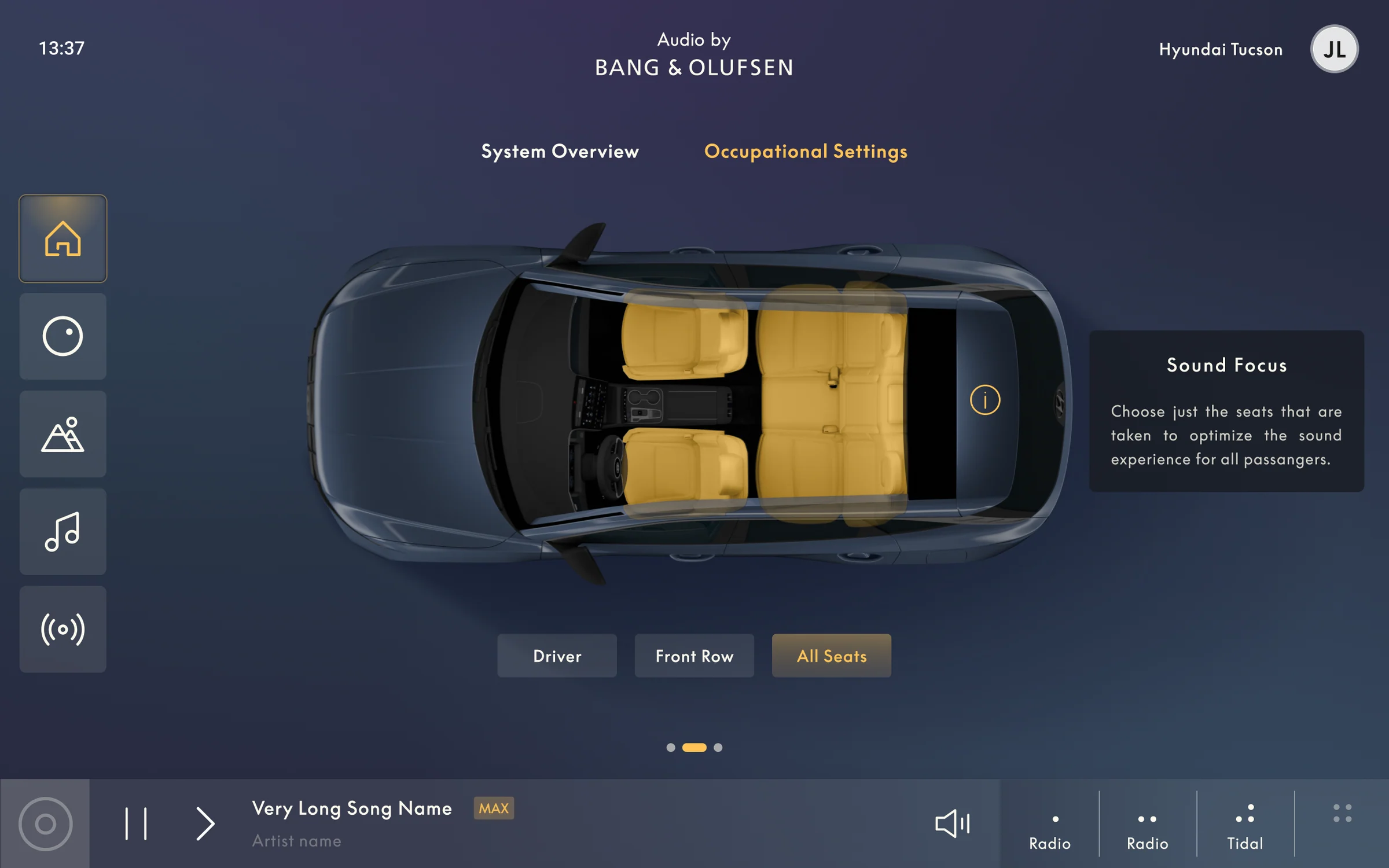
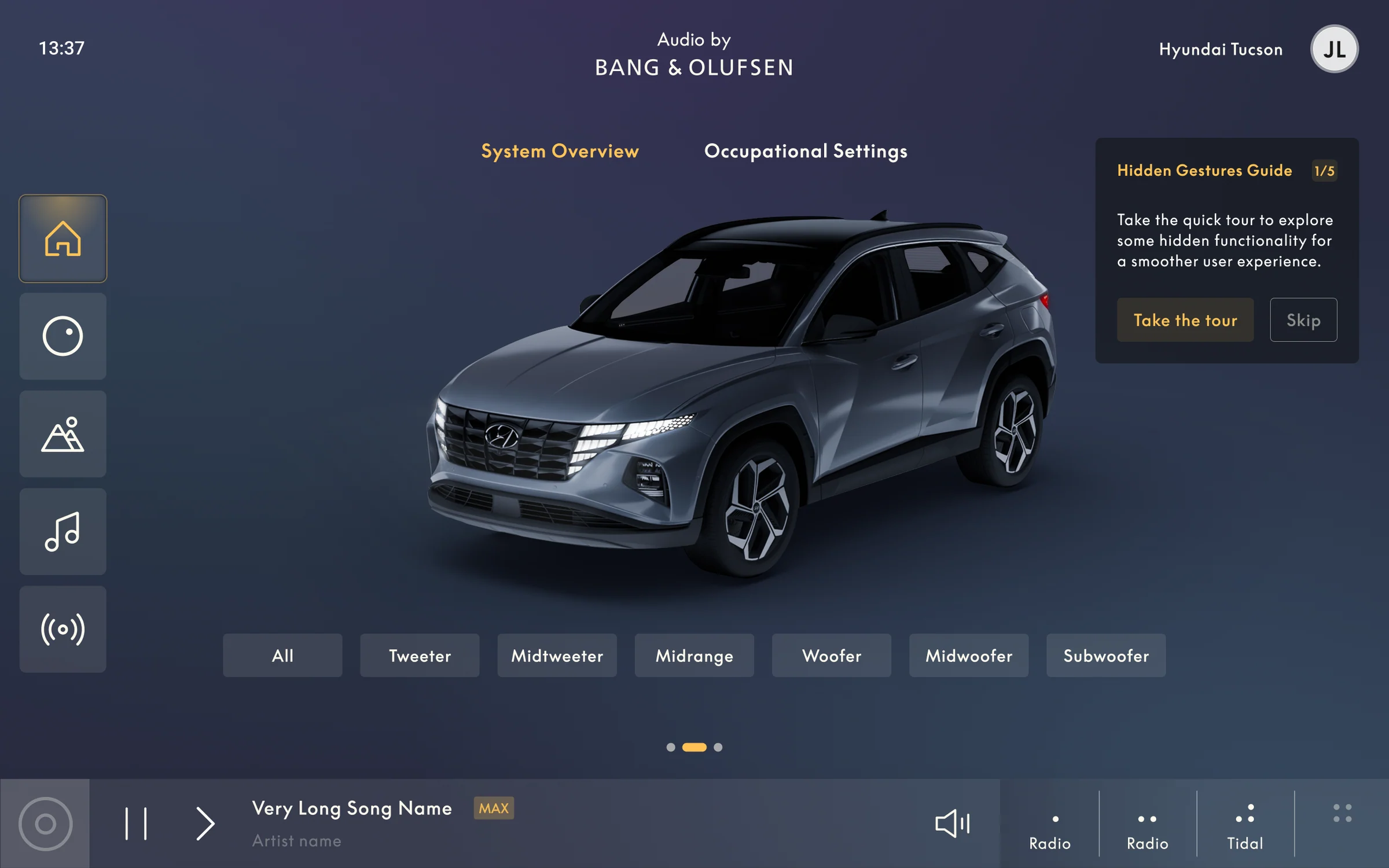
The production design: Beosonic and its AI tuning, Sound Focus and QR sign-in, with the media, radio and Beoscapes around them.

Beosonic: one dot on two feel-based axes
Sound modes, with Custom as soon as you move the dot
Ask for a sound in plain words
The AI answer lands on the same circle, with why it fits
Sound Focus: tune for the driver, the front row or every seat
System overview: the car’s speakers in 3D, with a gestures guide
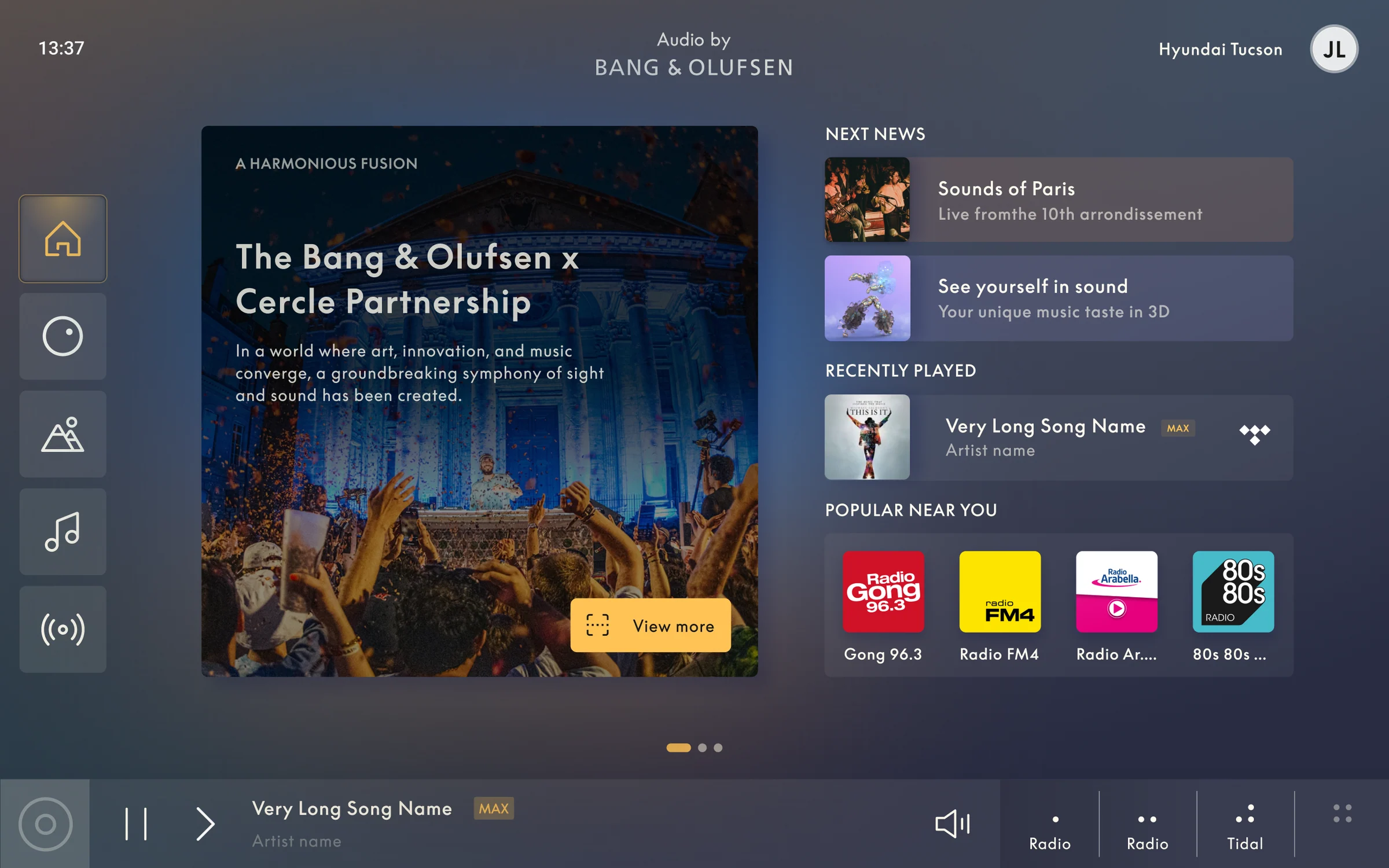
Sign in with one QR code: benefits first, then scan to pair
Signed-in home: stories, recently played and radio near you
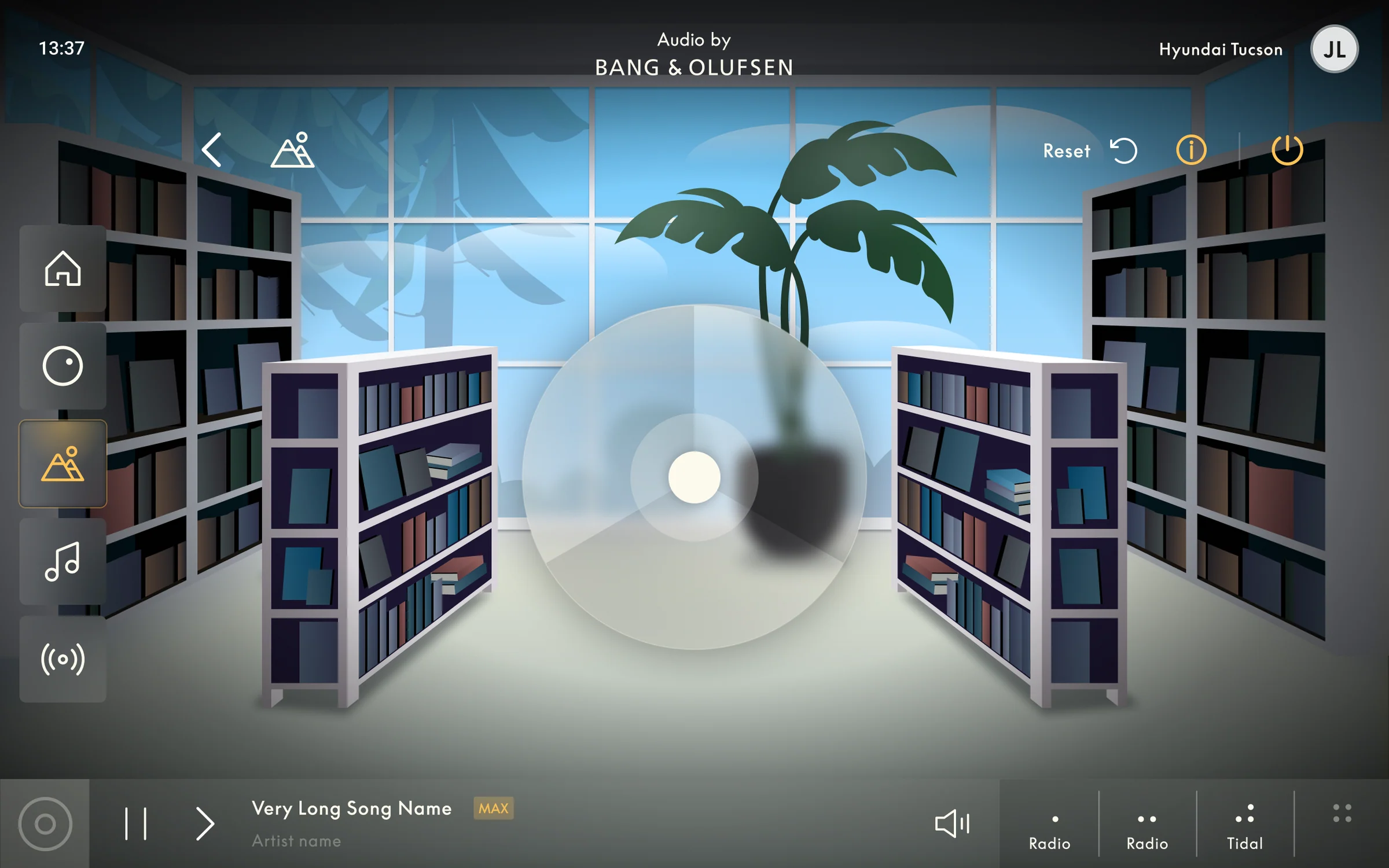
Beoscapes: an illustrated soundscape with its own dial
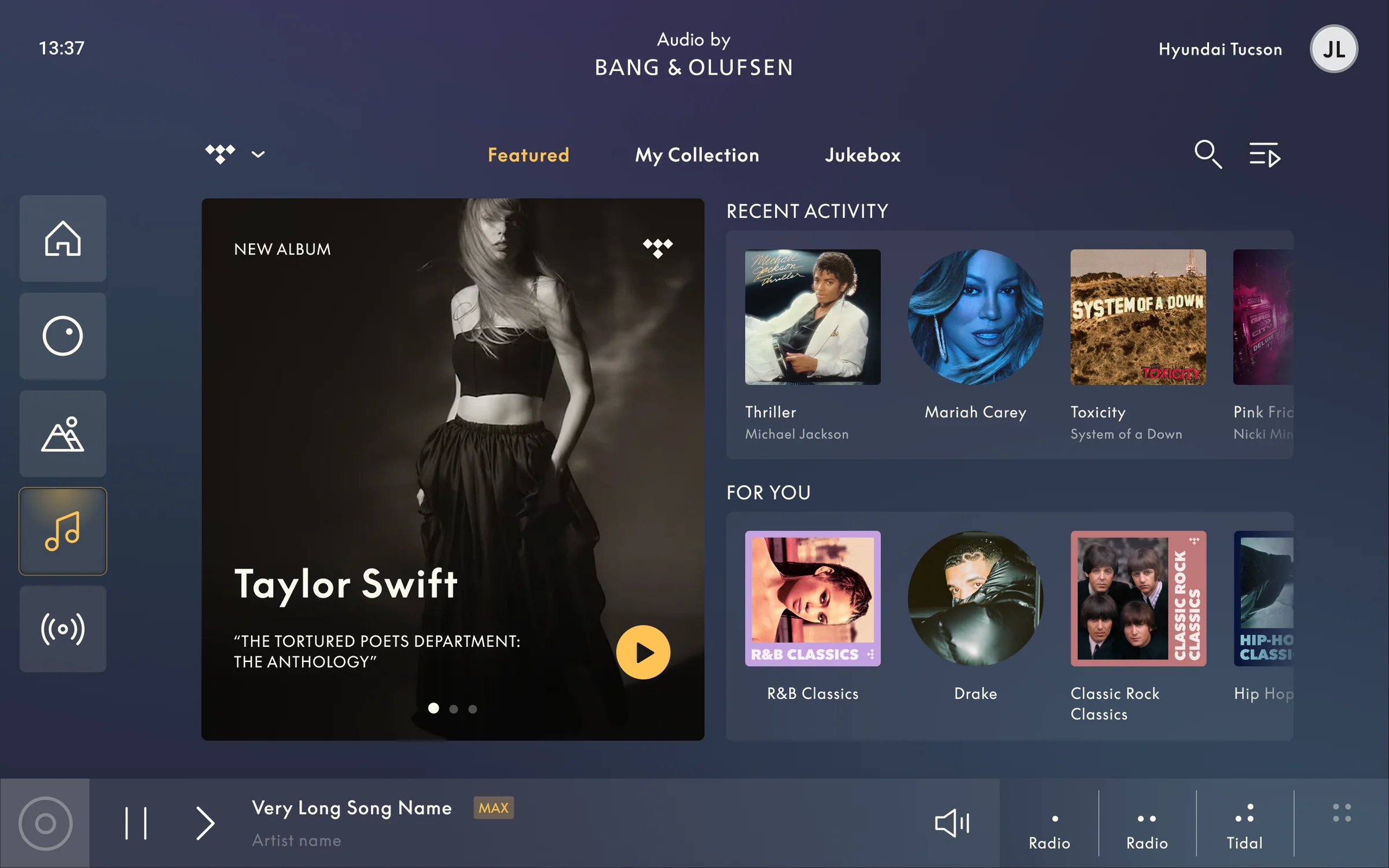
Media: featured releases and playlists
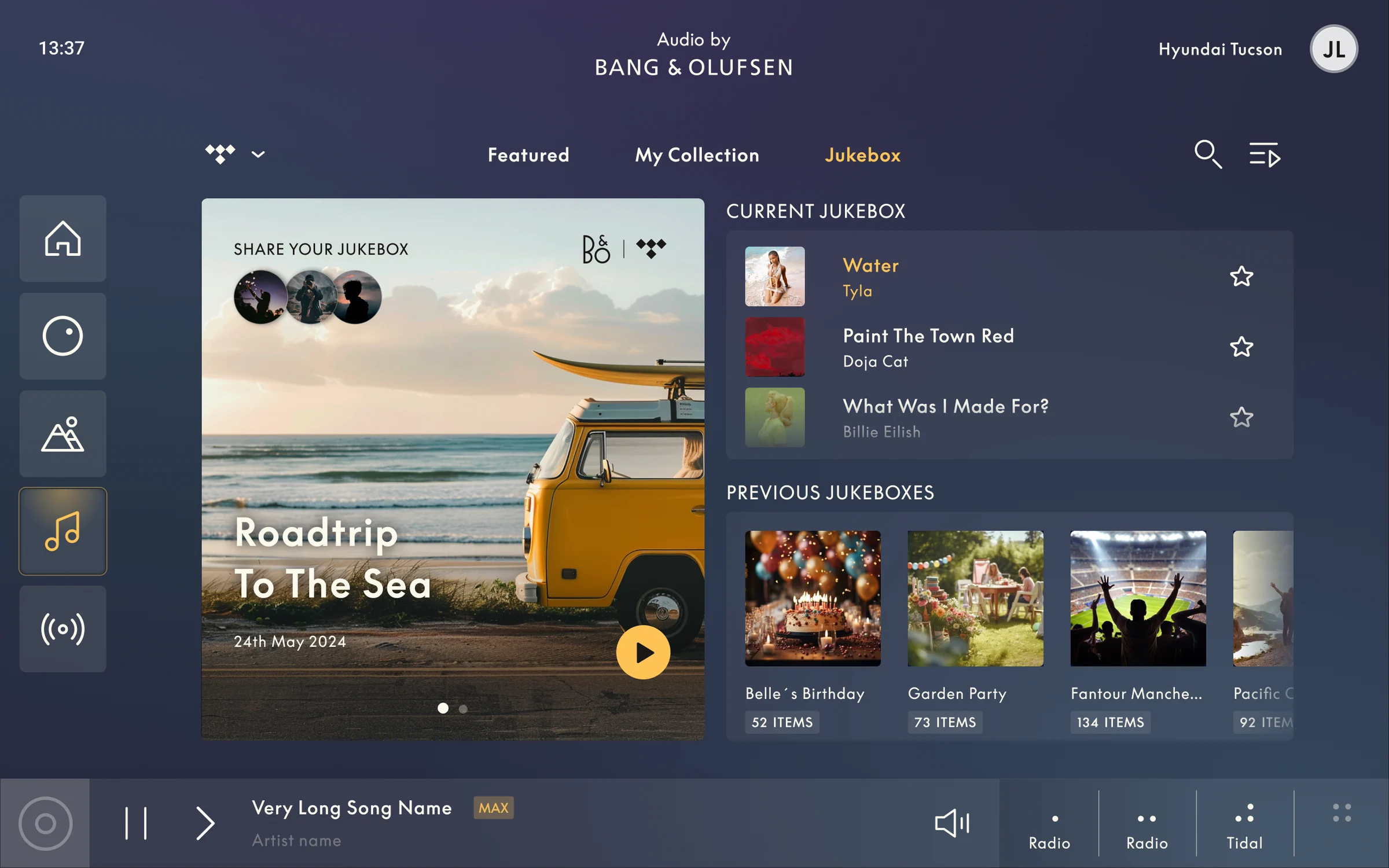
Jukebox: a shared queue for the road trip
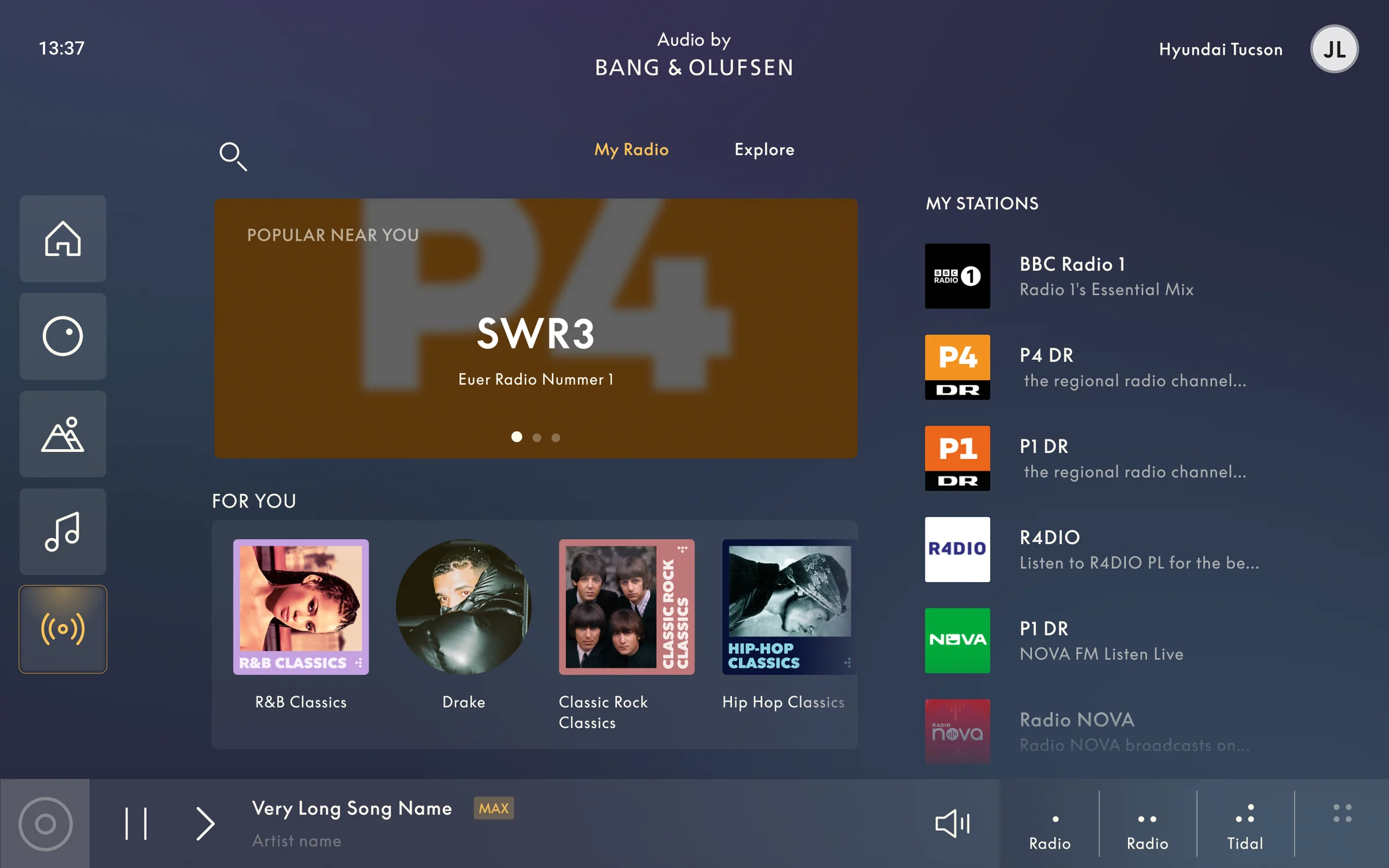
B&O Radio: stations near you and for you

07

Outcome

In-car prototype sessions · 98 participants

−40%Interaction time

In-car sessions vs 3-layer model

76%Satisfaction

In-car prototype sessions

−10%Driver distraction

In-car sessions vs 3-layer model

Navigation depth to change sound

before3 layers
after1 layer

Method and source

Compared against the previous 3-layer audio settings model, in the car with live sound and ambient light, before launch. 98 participants took part in the in-car prototype sessions. Beosonic, AI tuning and QR sign-in all shipped in Hyundai and Skoda vehicles; no production analytics are shown.

08

What I learned

Test where it’s used
In the car, the light lagged the screen, so light timing was tied to transitions — one of six fixes that only showed up in the vehicle.
Specify every state
Light behaviour was specified for every state, from start-up to soundscapes, so engineering never had to guess.

09

What I’d do next

Measure it in production
With Beosonic now in Hyundai and Skoda vehicles, I would measure how often drivers use the dot versus presets.
Next · 03 — Shipped workHarman Kardon →65% faster device setup in prototype usability testing.