Skip to content

Work / 03Shipped work

Role
Associate Experience Designer, HARMAN
Year
2024
Scope
3 cars · 5 display formats · 15-step demo
Status
CES 2024 · shipped in BMW, Subaru

Making sound you can see.

One Audio, a connected multi-device audio experience for Harman Kardon — one app across five in-car display formats. Showcased in HARMAN’s AutoOne cockpit at CES 2024, then shipped in BMW and Subaru vehicles.

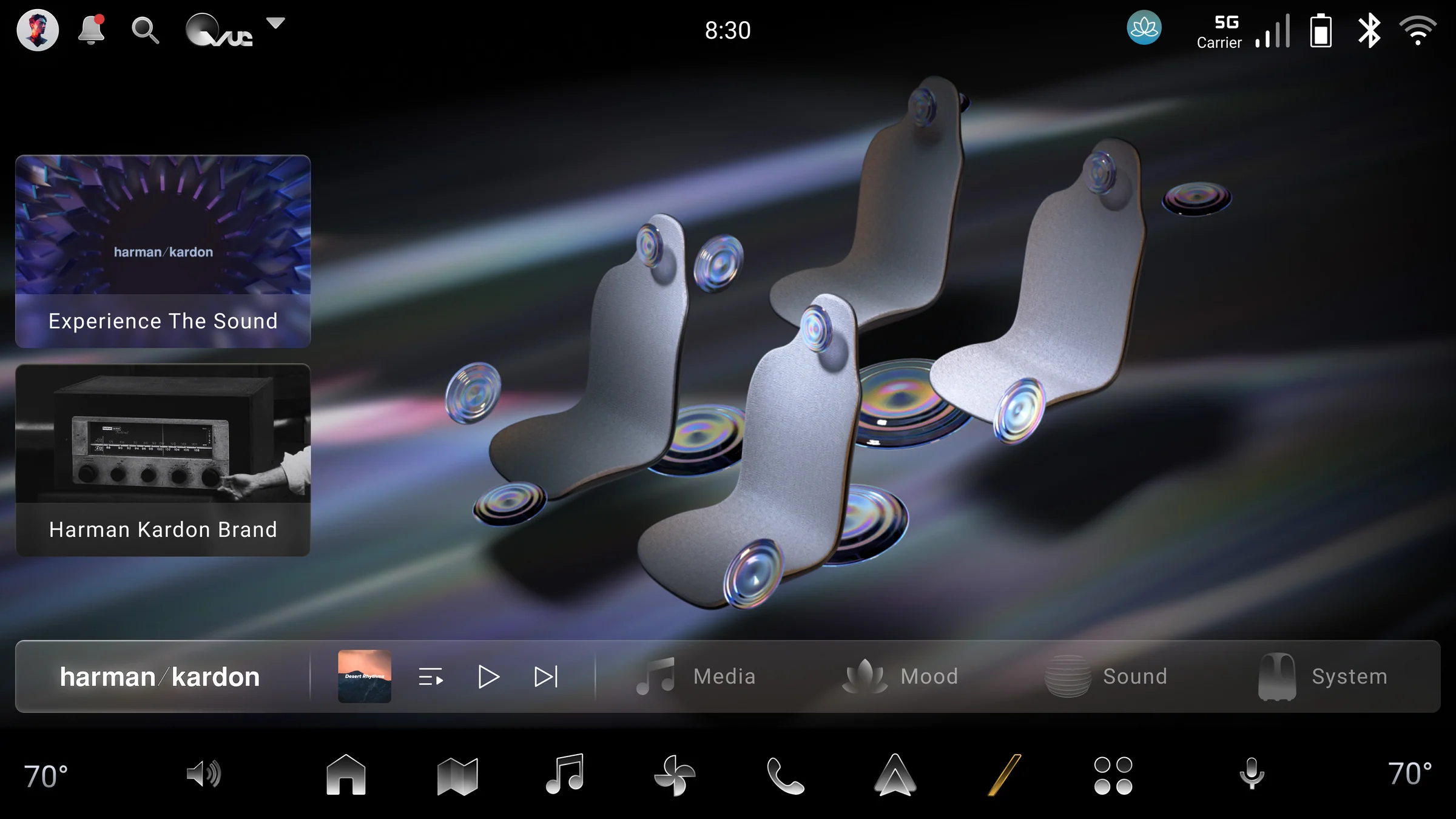
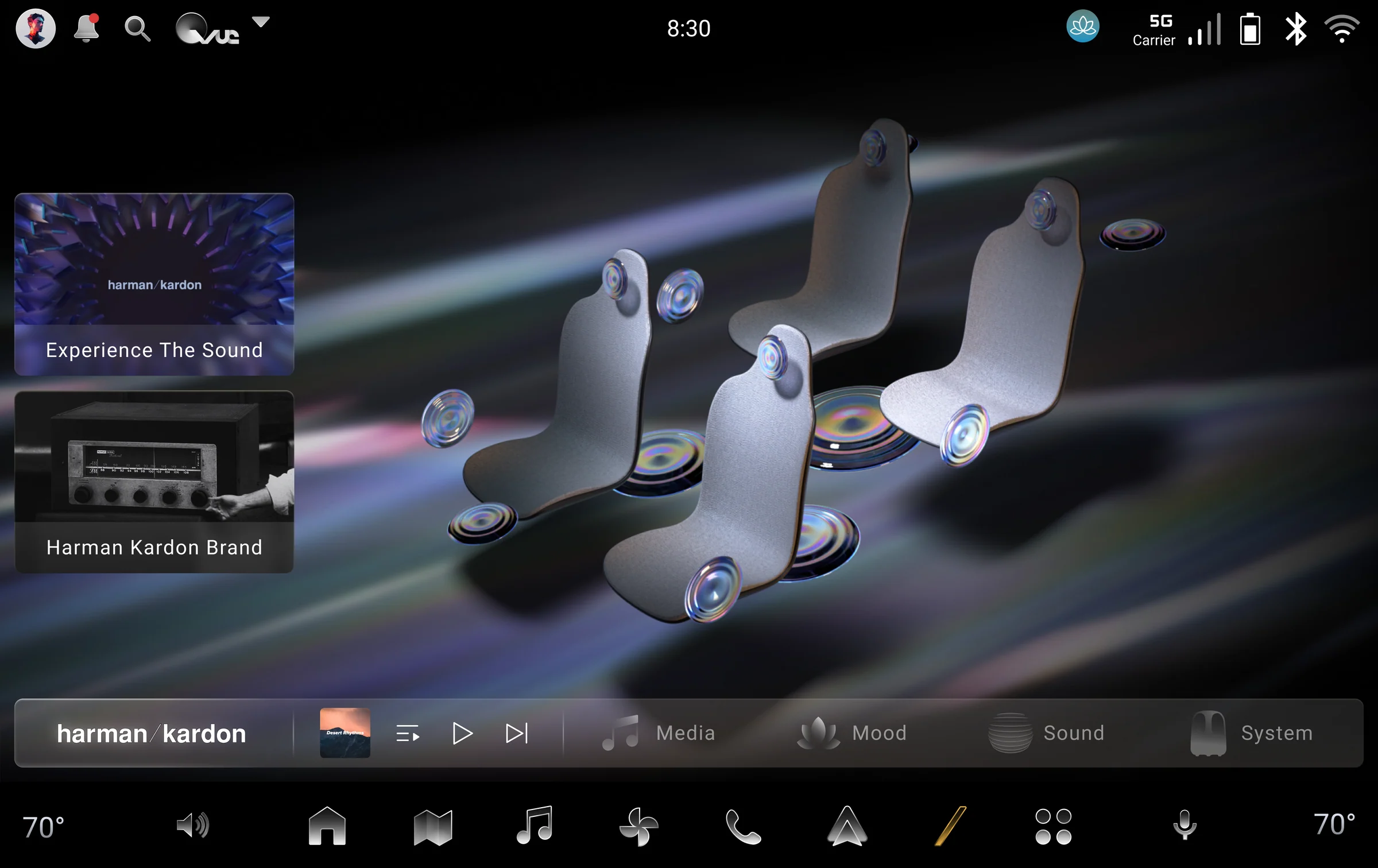
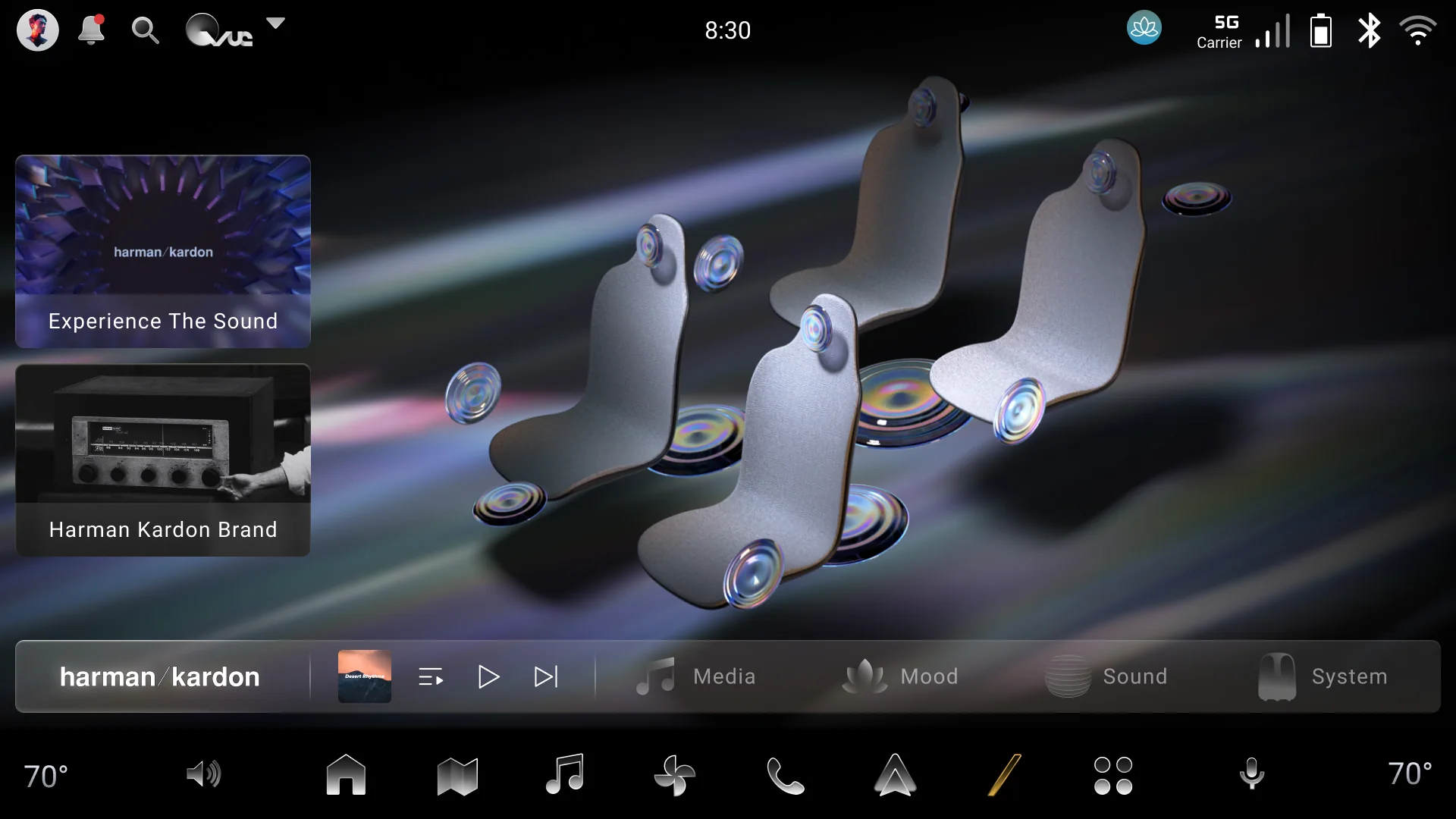
One Audio home screen with Seatsonic: seats rendered in 3D with their speakers
65%Faster setup

In 60 seconds

Problem

Premium audio hardware is invisible, and CES visitors get about six noisy minutes in the car.

What I did

Made seats, moods and light the interface, and wrote rules so one app reflows to five in-car displays.

Result

65%

faster device setup in prototype usability testing

Prototype validation · ~2,000 US participants

My part

I treated the 15-step CES demo as the user journey, wrote the adaptation rules that let one app reflow across five in-car display formats, and ran the ~2,000-participant validation with a UX researcher.

On this page

  1. 01The problem
  2. 02My contribution
  3. 03How I led the work
  4. 04Key decisions
  5. 05The product, screen by screen
  6. 06One app, every display
  7. 07Outcome
  8. 08What I’d do next

01

The problem

A 15-step guided demo of 5 minutes 40 seconds, on three cars and five display formats, for visitors who can barely hear the sound they’re meant to judge.

02

My contribution

  • Treated the guided demo as the user journey, giving each of its 15 steps a 10–30 second time budget.
  • Designed Home, Media, Mood, Sound and System, and the adaptation rules that let one app reflow to five display formats.
  • Reviewed every build side by side with the design and logged pixel-level fixes through to production.
  • Ran the prototype validation with a UX researcher: about 2,000 participants in the US.

03

How I led the work

01

Turned a demo into a journey

Treated the 15-step CES demo as the user journey, with a 10–30 second budget for every step.

02

Designed for scale, not per car

Wrote adaptation rules so one app reflowed across five display formats on three cars.

03

Validated at scale

Ran prototype validation with about 2,000 US participants alongside a UX researcher.

04

Owned quality to production

Reviewed every build against the design, logging pixel-level fixes through to production.

04

Key decisions

Decision 01

Rules, not redesigns.

Three cars, five display formats, one design team and a fixed CES date.

Rejected

✕ A separate layout per car and display

Five redesigns to build, QA and keep in sync before the show.

Chosen

✓ Adaptation rules

Background and UI scale separately and anchor to stage positions, so one app reflows to every screen.

Trade-off we accepted

Less per-car polish, in exchange for one consistent experience that shipped on time.
One app reflowed across display formats

Decision 02

Light that listens, predictably.

Cabin light had to react to the music on demo hardware, every time, in front of visitors.

Rejected

✕ Real-time generated light

Unpredictable on demo hardware.

Chosen

✓ Pre-rendered light video driven by music data

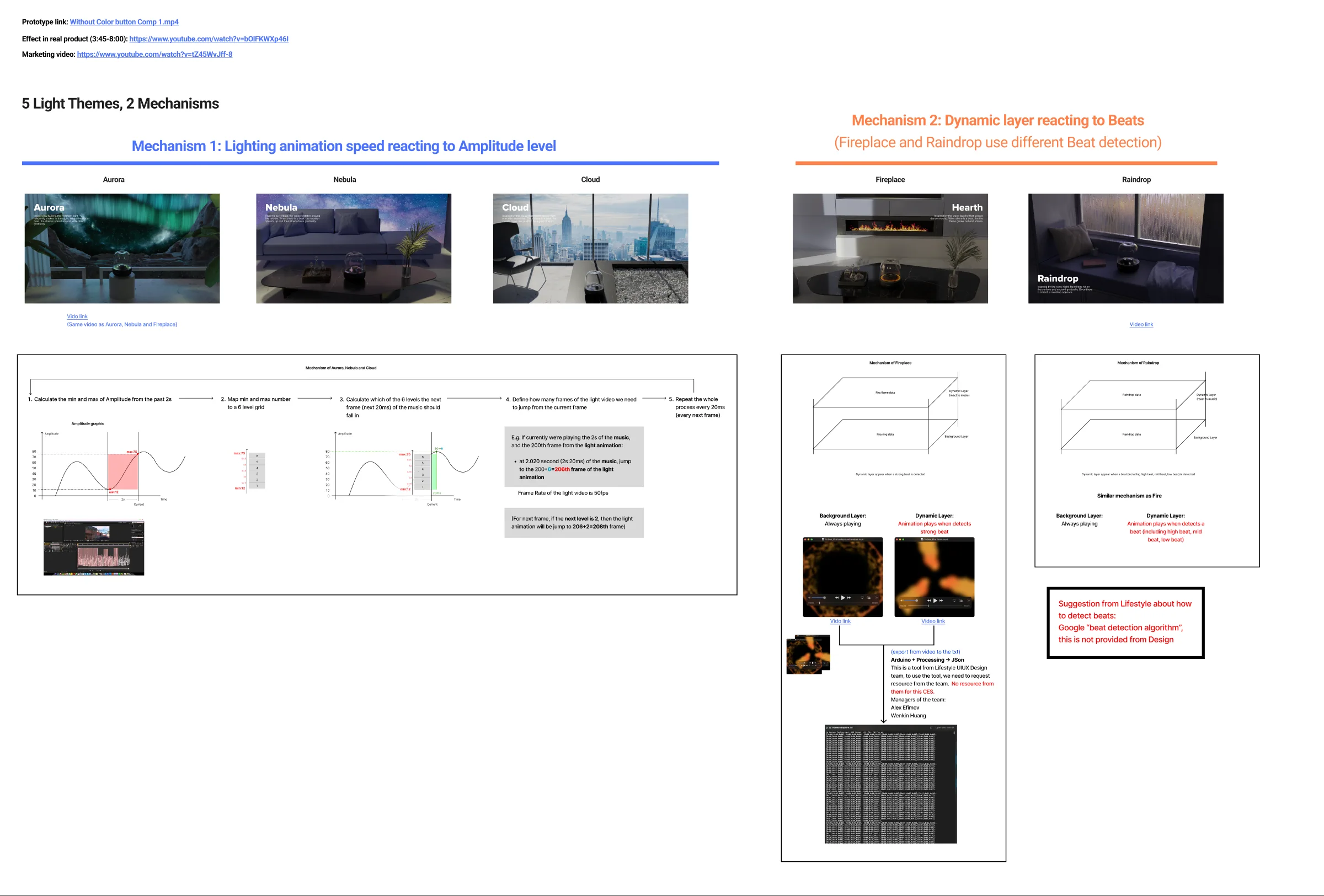
Five themes on two mechanisms: speed follows amplitude, layers follow beats.

Trade-off we accepted

Less generative, but cinematic and reliable on the show floor.

Light themes driven by music data

05

The product, screen by screen

The final app across Home, Media, Mood, Sound and System.

Home: the car’s seats and speakers in 3D
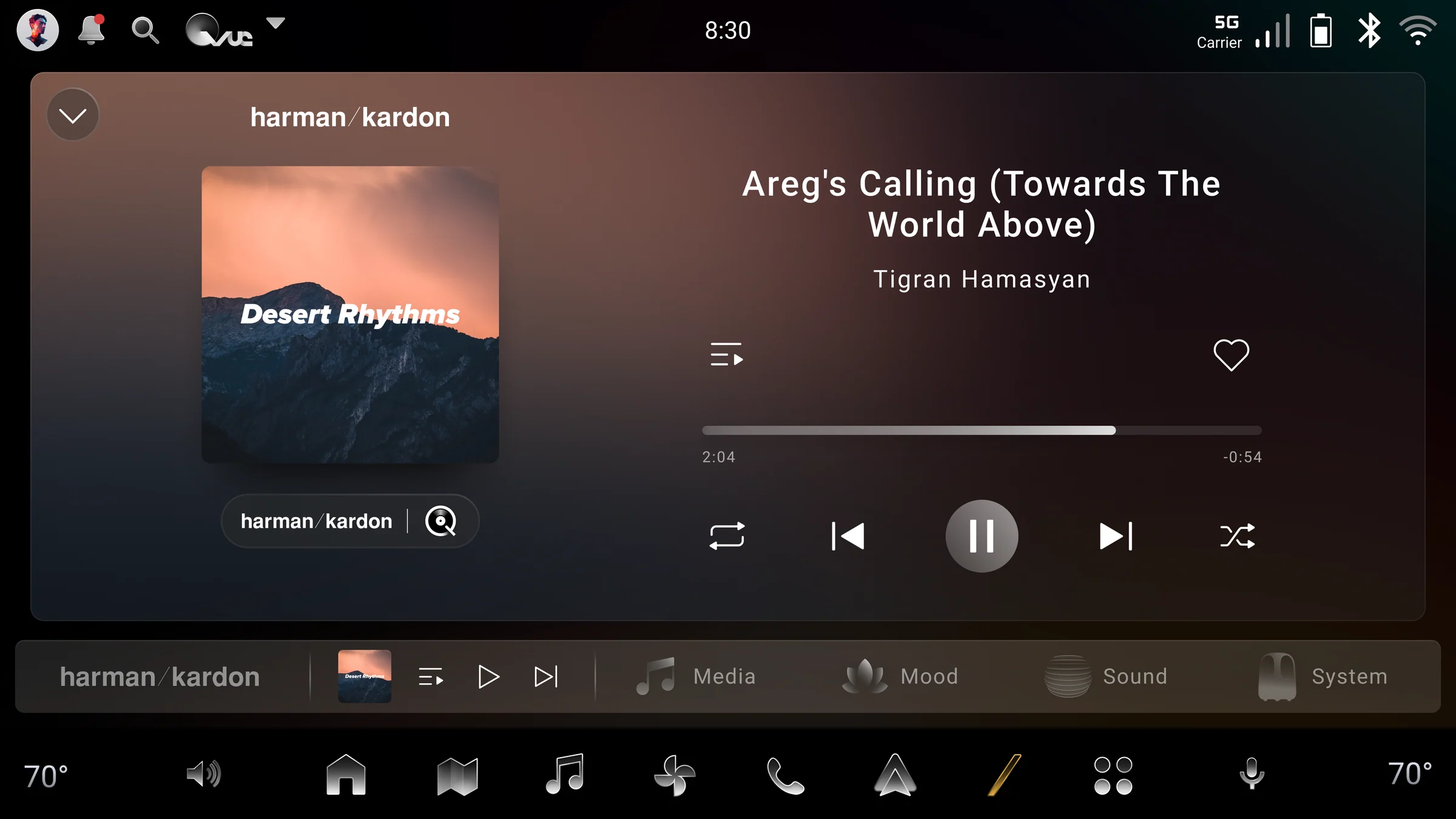
Now playing
Now playing
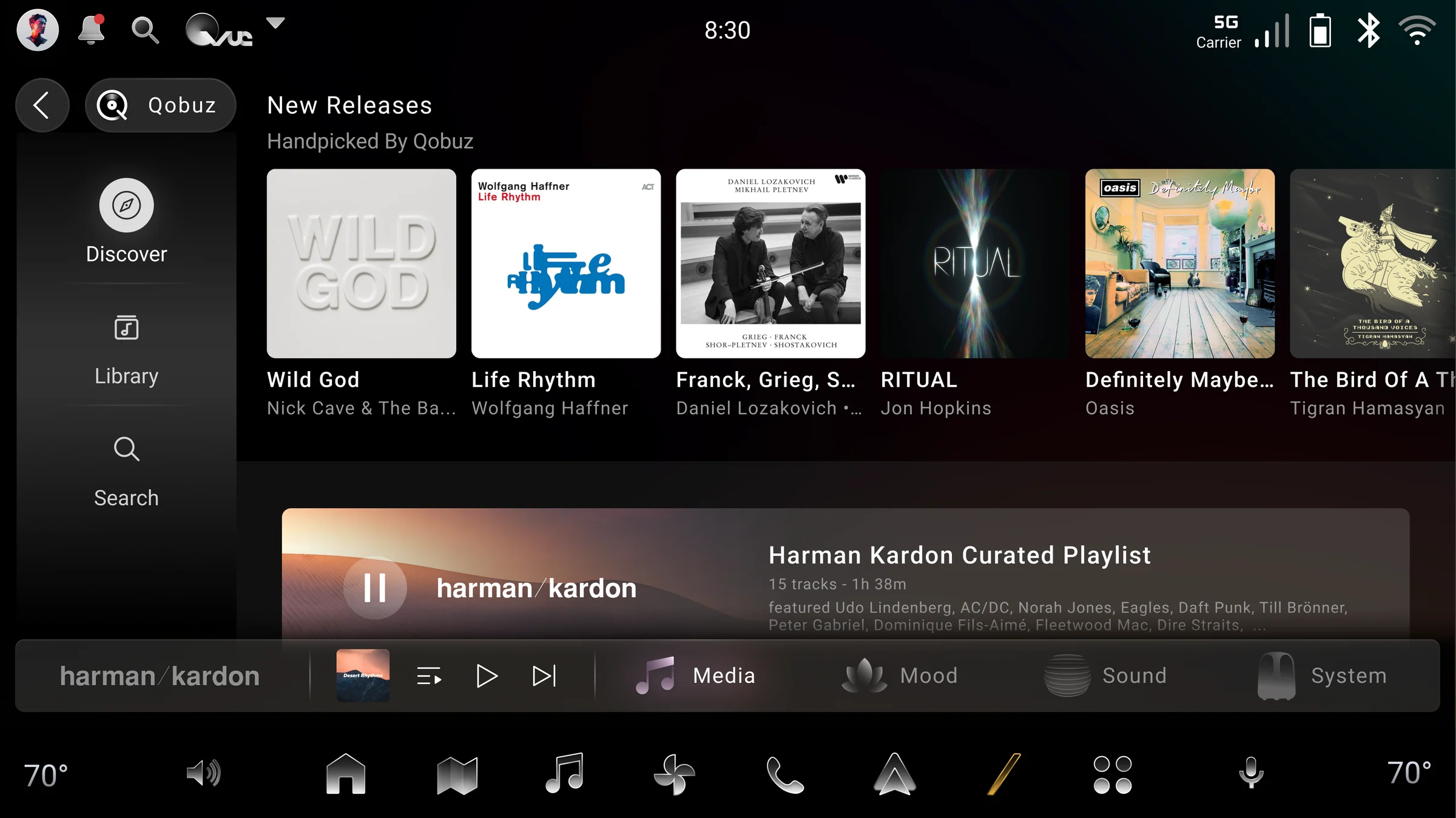
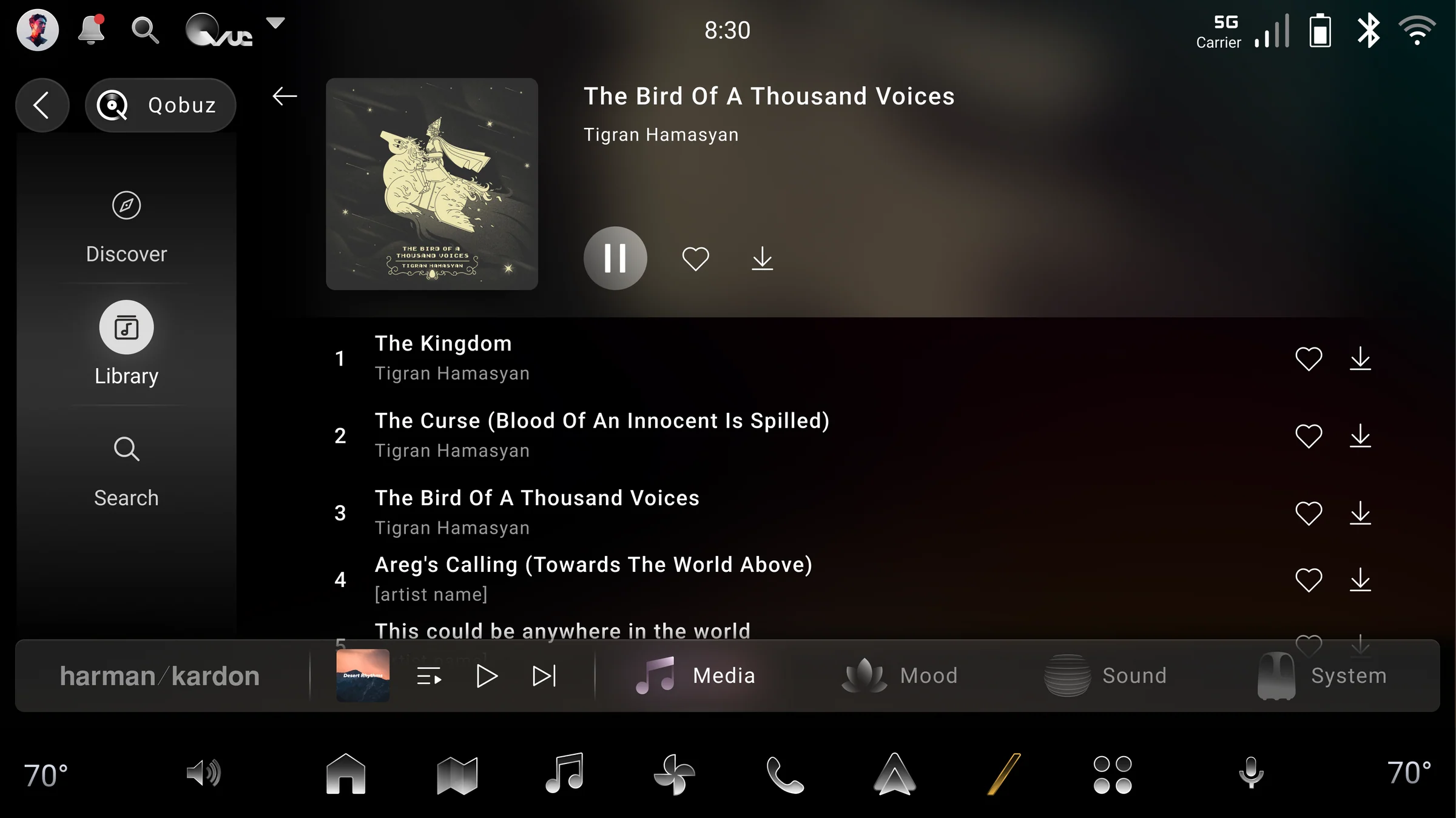
Media: Qobuz, with a Harman Kardon curated playlist
Album details
Album details
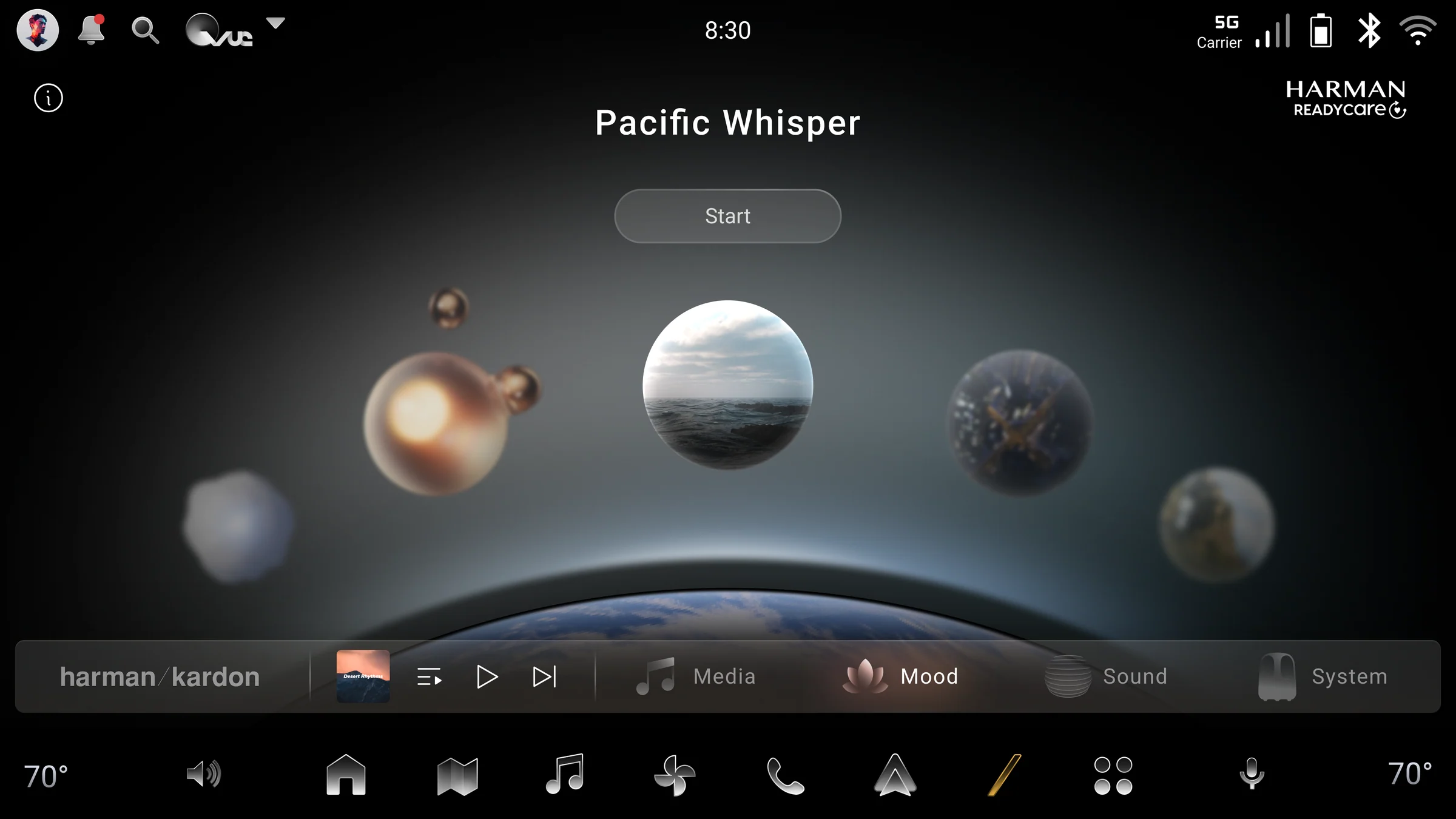
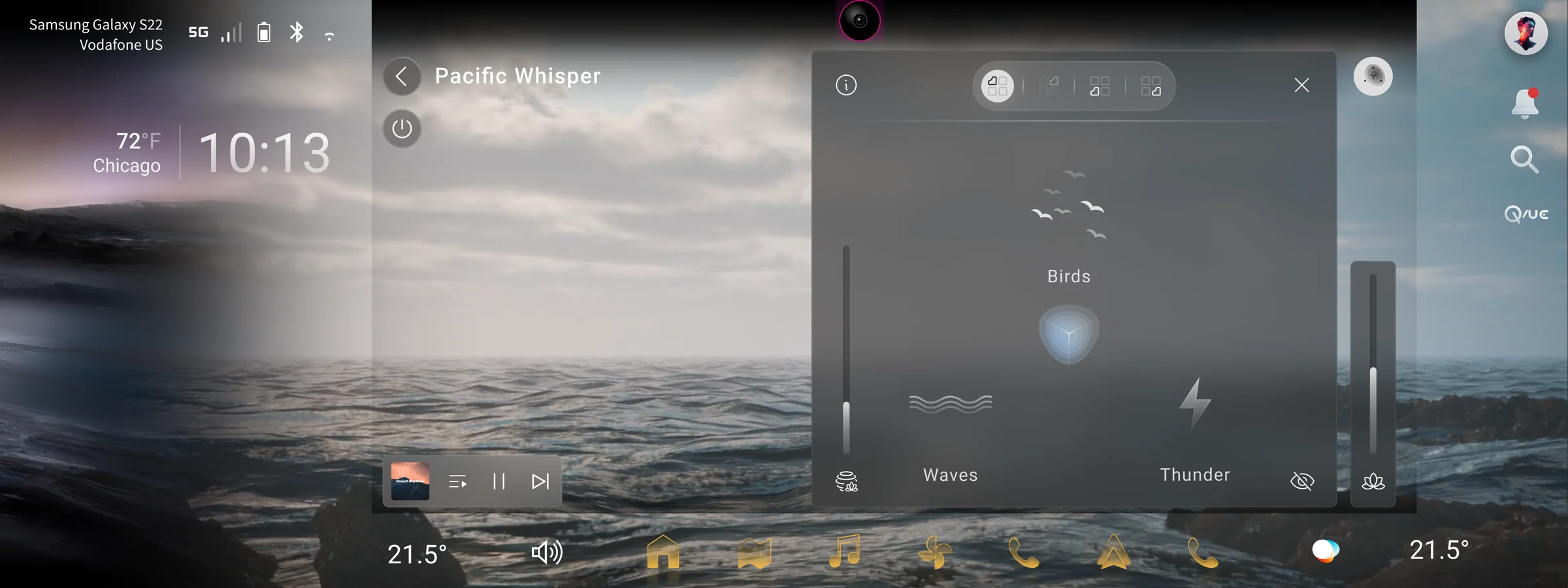
Mood: the Pacific Whisper scene
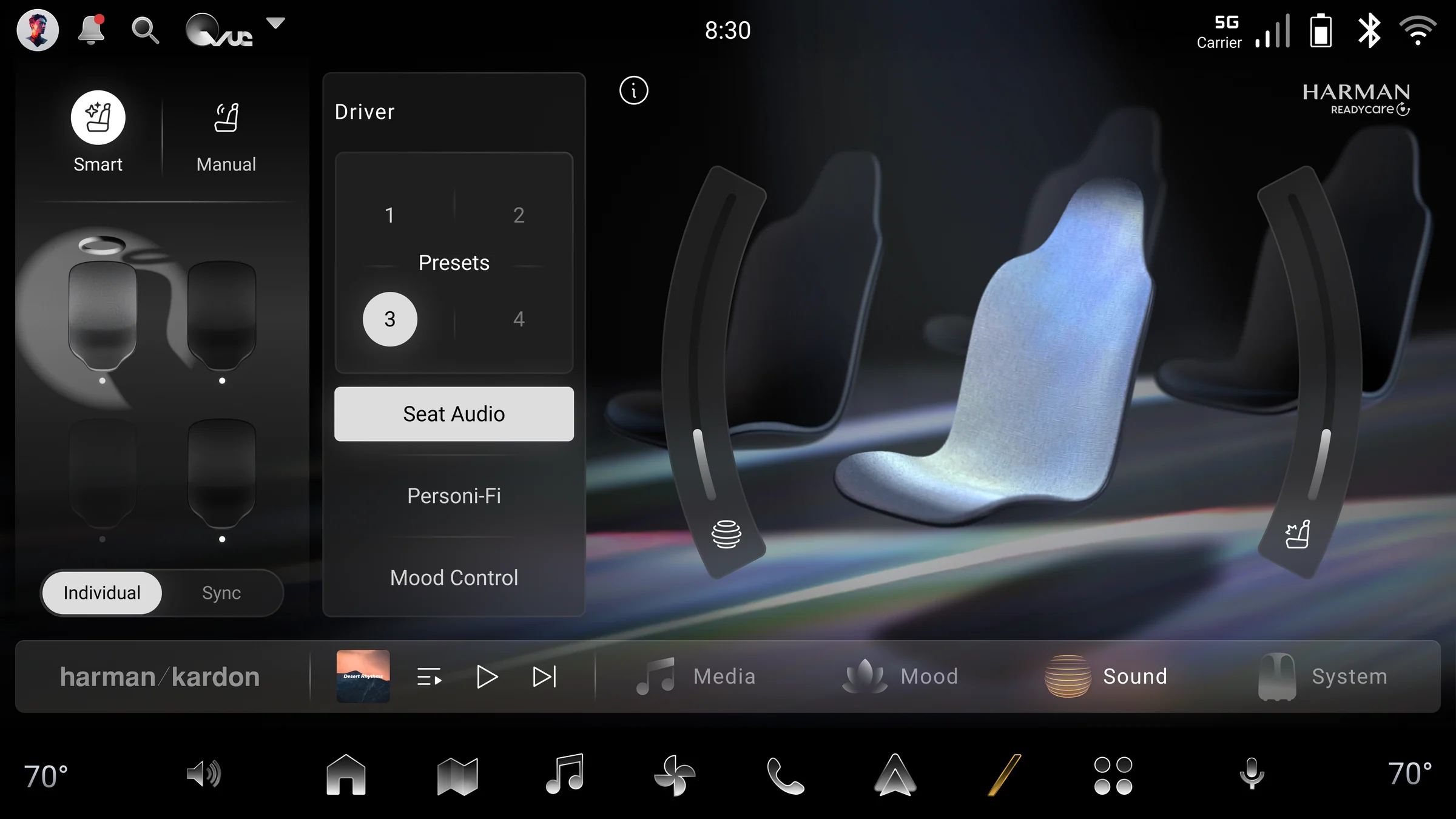
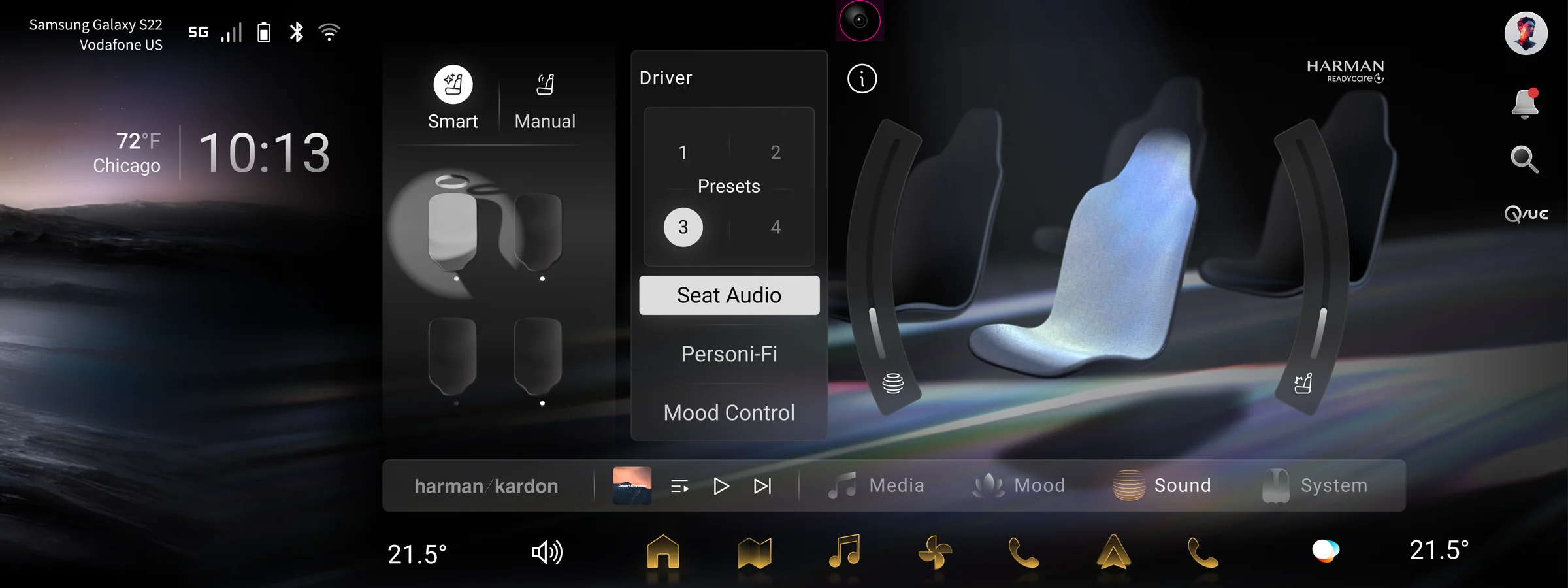
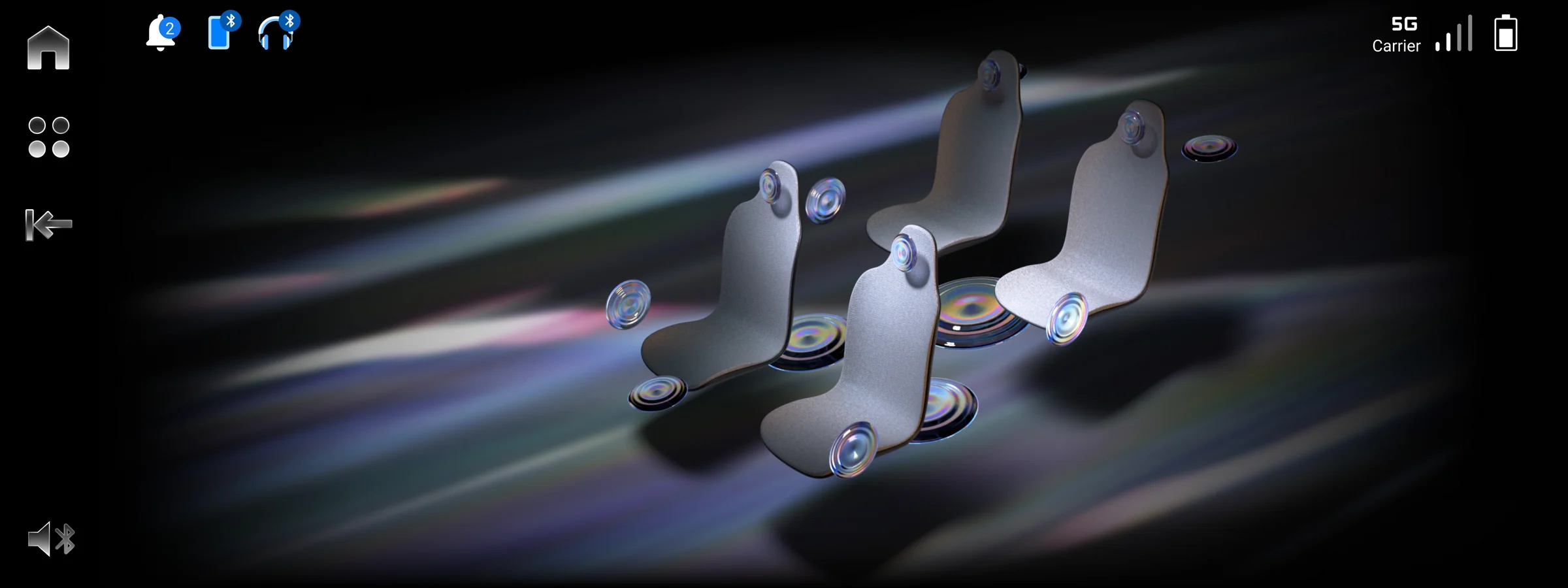
Seatsonic: audio for each seat
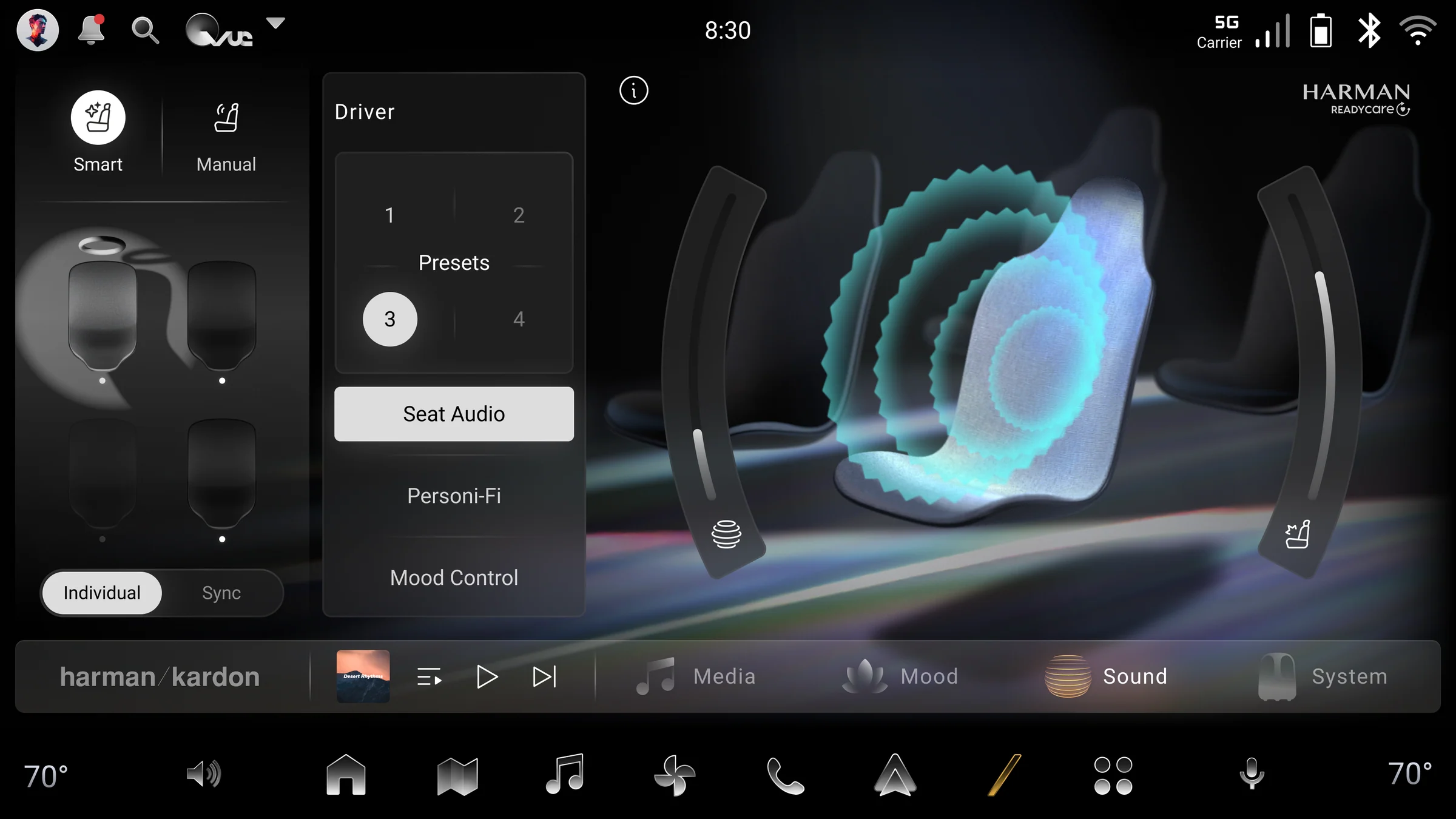
Seatsonic: bass impact, made visible
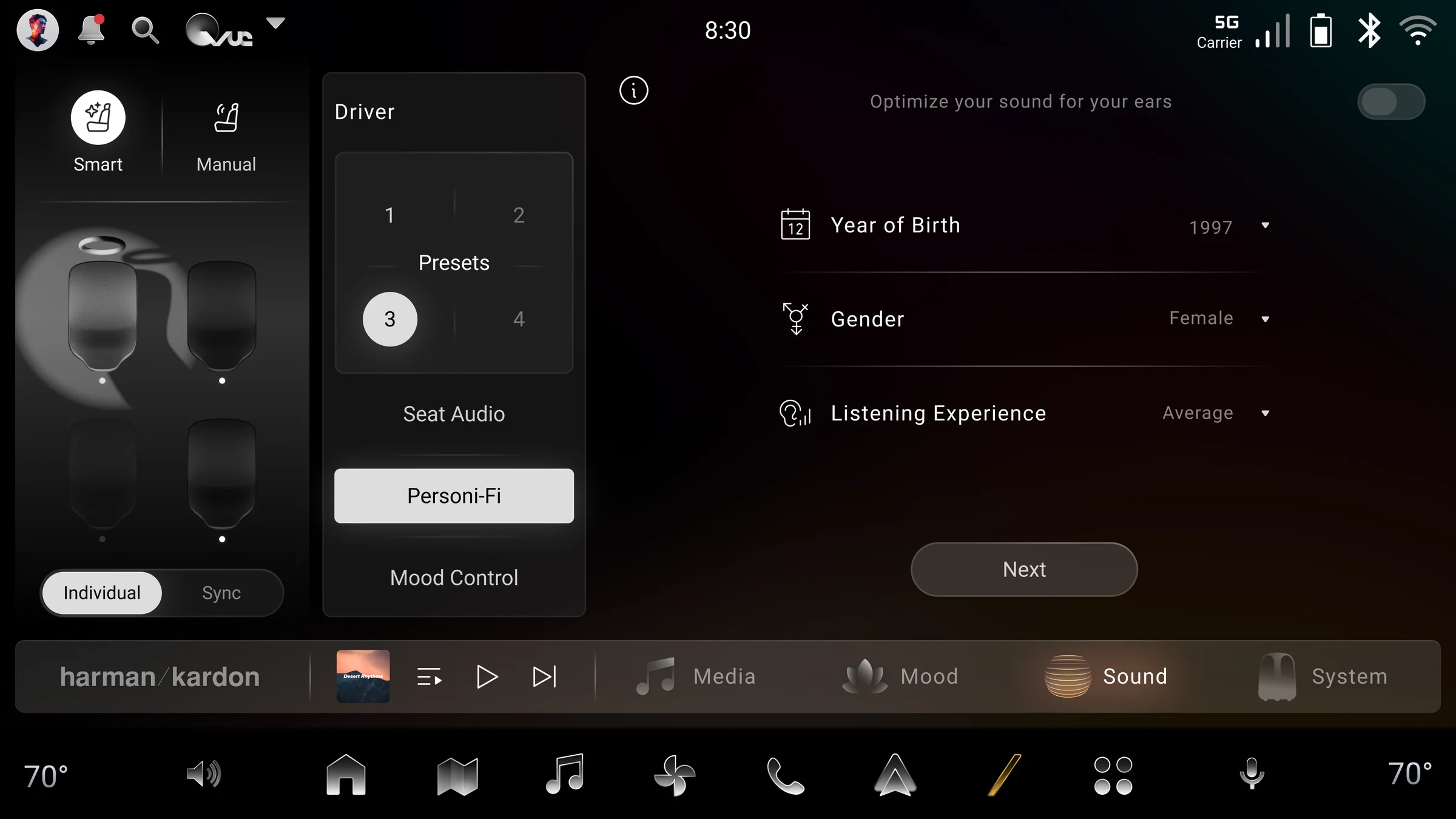
Personi-Fi: tune the sound to your ears
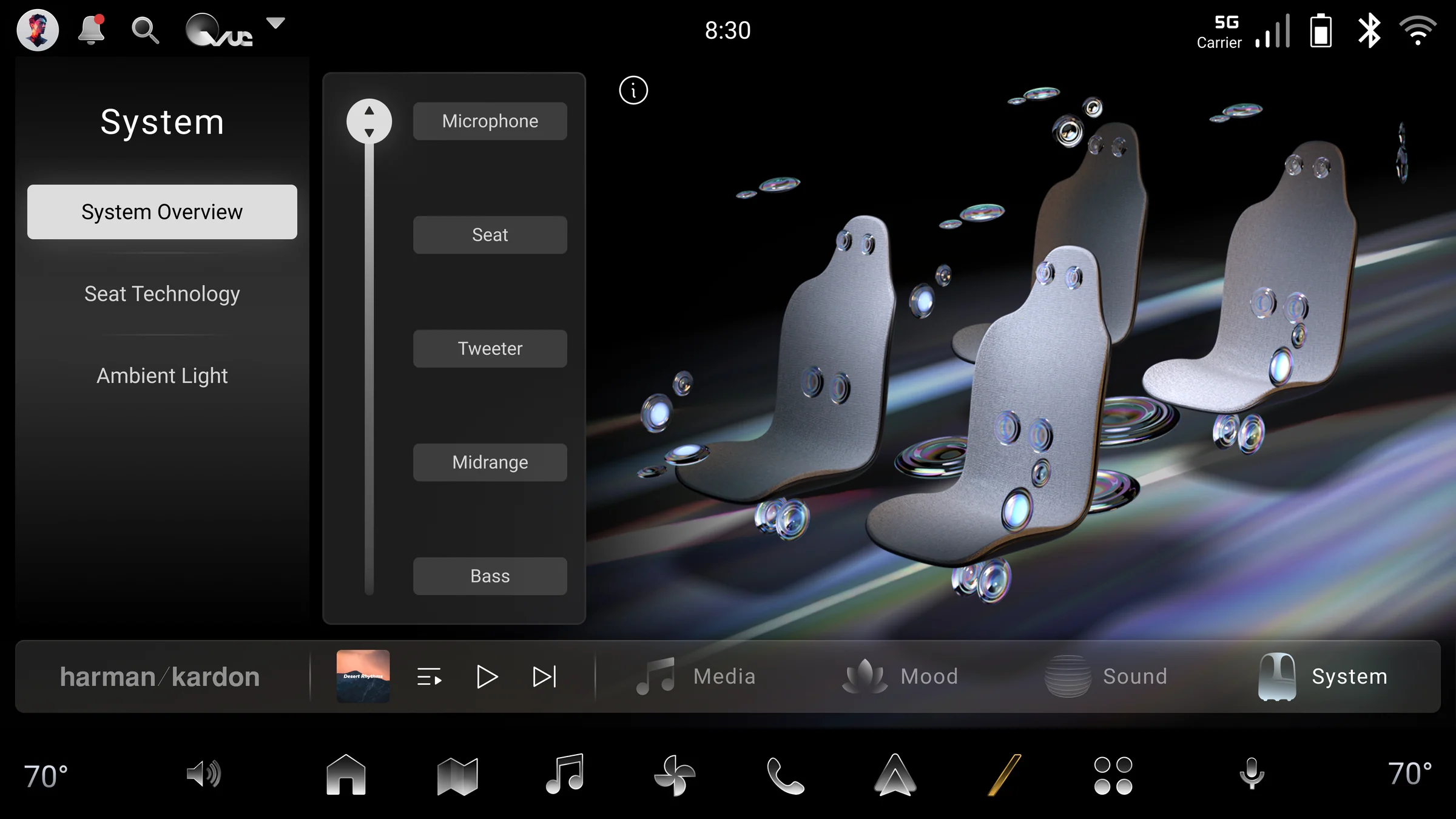
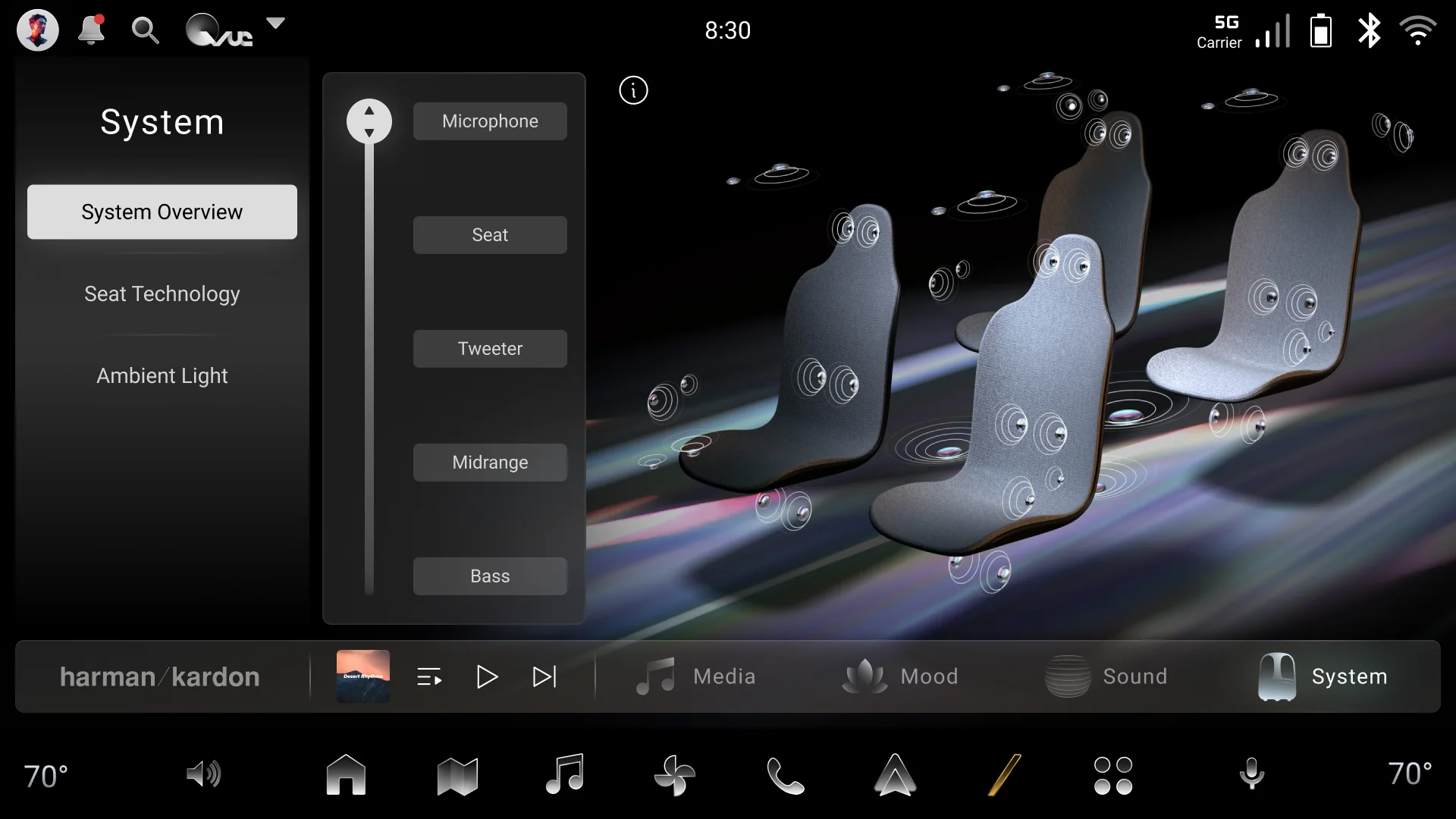
System overview: every speaker in the cabin
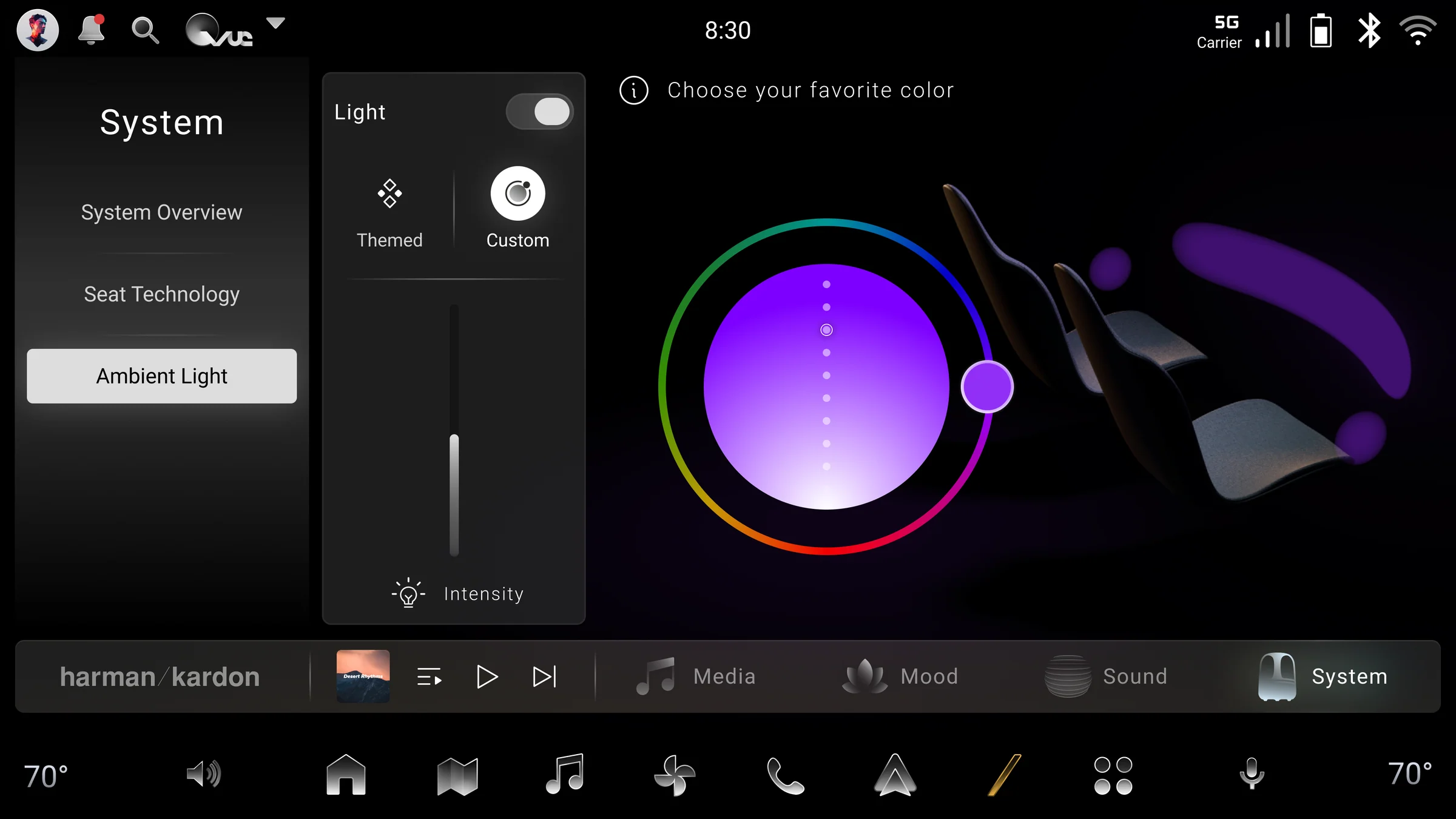
Ambient light in your own colour

06

One app, every display

The same screens reflowed by the adaptation rules to wide, passenger and tablet displays, with no per-car redesign.

Seatsonic reflowed to a wide, short display
Mood on the wide display
Home on the passenger display
Home reflowed to a taller tablet display

07

Outcome

Prototype usability validation (not measured at CES)

65%Faster setup

Prototype usability validation

+13%Multi-device use

Prototype usability validation

4.2Satisfaction / 5

Prototype rating

Method and source

All three numbers come from prototype usability validation with about 2,000 participants in the US, which I ran with a UX researcher — not production analytics. CES 2024 was a showcase, listed as exposure rather than a measured result; the whole app later shipped in BMW and Subaru vehicles.

08

What I’d do next

Measure it in production
Now that One Audio ships in BMW and Subaru vehicles, I would check whether faster setup holds outside the lab.
Next · 04 — Own product · in designPlug →An AI that finds what a company overpaid its vendors and recovers it — and is only paid once the money is back.